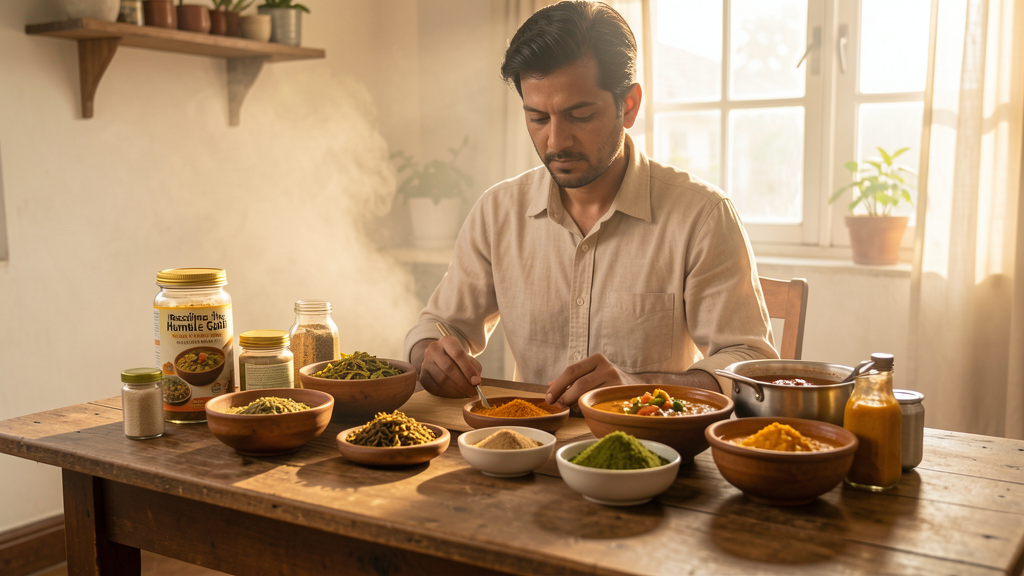
Dry Veg Curries
Rescuing the Humble Gobi: Why Kasuri Methi is the Only Fix You Need
Discover how dried fenugreek leaves can transform bland, steamed cauliflower into a complex, weeknight-winning dish with a bitter-herbal edge.
7 min read
 Practical guides to practical Indian cooking, spices and weekly curries
Stop mashing your dinner. Learn how a quick turmeric and salt bath creates a protective seal on potatoes, ensuring they stay whole and fluffy in dry curries.
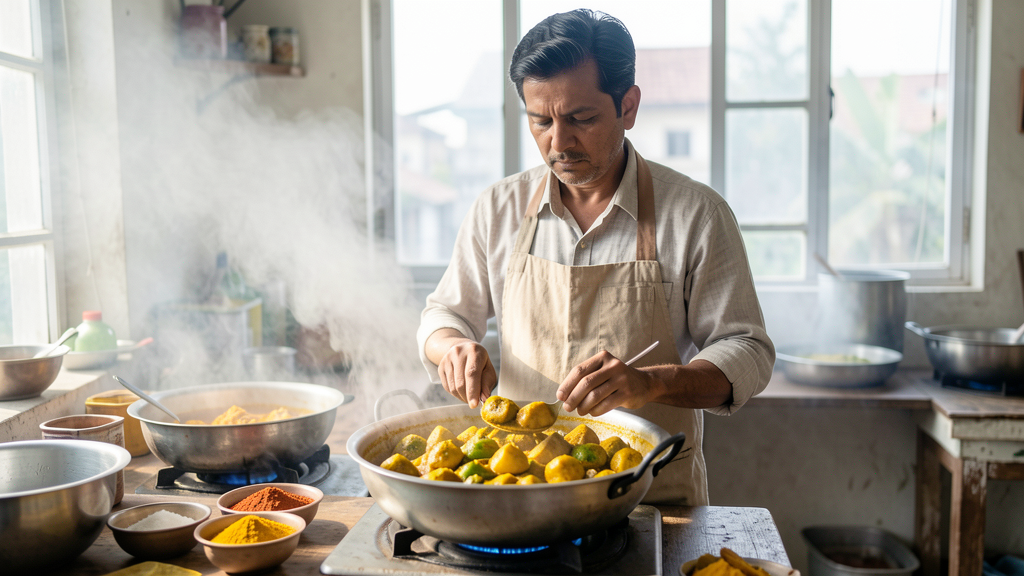
Editorial image illustrating The Turmeric Armor Technique: Why You Must Par-Boil for Aloo Gobi
There is a specific kind of frustration that comes from spending twenty minutes stirring a pot of dry-vegetable-curries, only to serve a bowl of textured wallpaper paste. You know the dish I mean. You intended to make Aloo Gobi—those distinct, golden cubes of potato and snowy florets of cauliflower. Instead, you got spiced mashed potatoes with chunks of cauliflower floating in it like icebergs.
I see this happen constantly with home cooks trying to rush the process. They dump raw, chopped potatoes into the hot oil with the spices, add water, cover the lid, and hope for the best. The problem is that raw potatoes are thirsty. They release starch aggressively as they cook, and in a dry curry format where there isn't much liquid to begin with, that starch glues everything together. Furthermore, raw potatoes take longer to cook than cauliflower. By the time the potato is soft, the cauliflower has disintegrated, or you have over-stirred the pan trying to encourage even cooking, crushing the softening spuds into mush.
To fix this, we have to stop treating the potato preparation as an afterthought. If you want distinct, firm cubes that hold their shape during a high-heat stir-fry, you need to employ the "Turmeric Armor" technique. It changes the game entirely.
The core issue with the direct-fry method is structural integrity. A raw potato cube is essentially a rigid sponge. When it hits the hot oil, the exterior cooks fast, creating a pseudo-seal, while the interior remains raw. To get that interior cooked through without burning the outside, you usually have to add water or lower the heat. Adding water to a dry curry breaks the cardinal rule of the dish; you end up steaming the vegetables rather than frying them.
Steaming potatoes makes them prone to breaking apart. The moment you slide your spatula under a steamed potato cube to flip it, it shears. The result is the familiar mash. The other issue is seasoning penetration. Salt added at the end of a raw-potato cook sits on the surface. You bite in, and the outside is salty, but the inside is bland.
Par-boiling solves both issues, but only if you do it with the right chemistry. Simply boiling them in plain water leaves them vulnerable to breaking down in the final phase. We need to alter the surface of the potato before it ever touches the main cooking pan.
The technique I use for my Tuesday night curries involves par-boiling the potatoes in heavily salted water spiked with a generous amount of turmeric. This isn't just for flavor or color; it's a textural hack.
Turmeric acts as a mild astringent and penetrates the outer layer of the potato. When combined with salt, it firms up the exterior of the cube. We are essentially creating a microscopic "skin" on the cut surfaces. This armor prevents the potato from absorbing too much oil during the fry and stops it from disintegrating when stirred against the metal of your wok or kadai.
I usually peel three large Russet or Yukon Gold potatoes and cut them into 1.5-inch cubes. Uniformity is non-negotiable here; if one cube is small, it will turn to mush while the larger one cooks. I drop these into cold water, bring it to a rolling boil, and immediately add two teaspoons of salt and one teaspoon of turmeric. Let them boil for exactly six minutes.
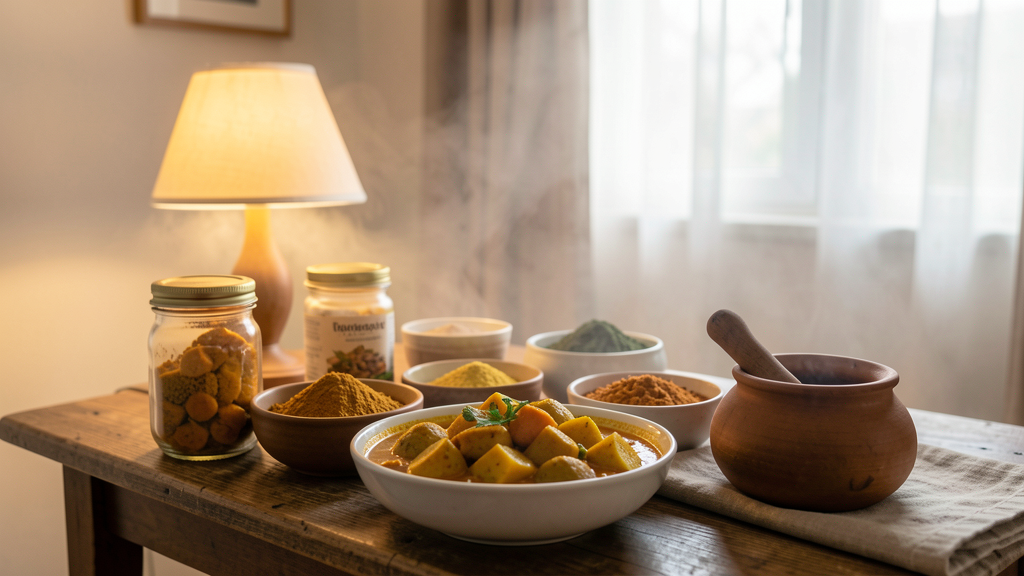
Why six minutes? At the six-minute mark, the potato is cooked about 70% of the way through. A fork will slide into the center with resistance, but the cube won't fall apart. If you boil them fully now, they will crumble later. You want them firm enough to handle but soft enough to finish cooking quickly in the curry.
Once drained, the potatoes need to steam dry in the colander for about four minutes. Do not rinse them. That turmeric-stained exterior is your texture insurance. Heat your oil in a heavy-bottomed pan. I prefer mustard oil for its bite, but a neutral vegetable oil works fine.
Add your cumin seeds and allow them to sizzle. Here is where many people mess up: they dump the potatoes in too early. Wait until the oil is shimmering. Gently place the potatoes in the pan. Do not stir them for the first two minutes. Let the heat sear the bottom. This initial crust is what holds the cube together.
After the sear, add your aromatics—ginge, garlic, green chilies. Stir gently, using a folding motion rather than a scraping one. Now, introduce the cauliflower. Since the potatoes are already 70% cooked, the cauliflower has a fighting chance. If you are looking for ways to elevate the flavor profile here, I highly recommend checking out this method for turning boring cauliflower into a family favorite with Kasuri Methi. The dried fenugreek leaves add a bitterness that cuts right through the starch of the potatoes.
You might worry that adding the cauliflower later will undercook it. Because the potatoes are par-boiled, the total stir-fry time drops significantly. You only need about ten to twelve minutes on medium-high heat to finish the dish. The cauliflower, cut into similar-sized florets, will tenderize in this timeframe without turning into mush.
This method also liberates your spices. When you add your garam masala or coriander powder, you are tossing it with vegetables that have a dry, firm surface. The spices coat the ingredients rather than dissolving into a slurry. This is crucial for that restaurant-quality look where every piece of potato is distinct and covered in red oil, rather than drowning in a yellow sauce. I discussed this phenomenon in depth regarding why your garam masala tastes different every time; the texture of the carrier (the potato) dictates how the spice is perceived.
The only trade-off with this method is the extra pot used for boiling. I know the editorial stance here is strict on cleanup. However, I argue that this actually saves time. You avoid the fifteen minutes of scraping burnt starch off the bottom of your main pan, which is what happens when raw potatoes stick. A quick rinse of the boiling pot takes thirty seconds.
You know you have achieved perfection when you perform the final flip of the pan. The potatoes should tumble over each other, retaining their sharp edges. There should be no "cream" forming at the bottom of the pan. The dish should look dry, with oil just beginning to separate from the masala.
The par-boiling technique transforms Aloo Gobi from a risky, often-mushed side dish into a reliable, textured main course. It ensures that the spice is deep inside the potato, not just on the surface, and that the vegetable can stand up to the aggressive heat required for a proper stir-fry. It turns the potato from a passive ingredient into the sturdy backbone of the meal.

Discover how dried fenugreek leaves can transform bland, steamed cauliflower into a complex, weeknight-winning dish with a bitter-herbal edge.
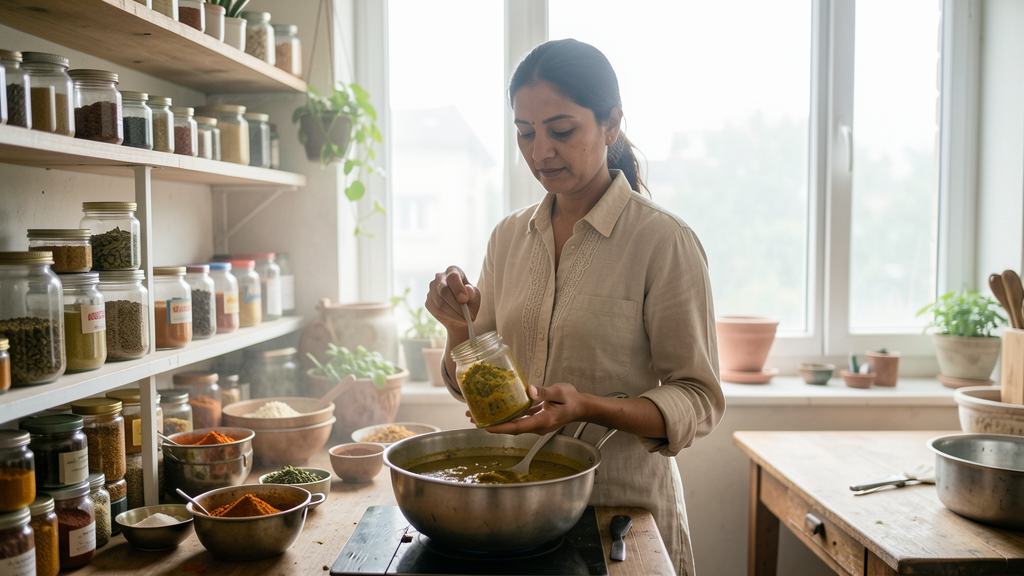
Stop chasing the ghost of a perfect curry by understanding how spice ratios and grind sizes alter your garam masala's potency every single time.