Dry Veg Curries
Stop Steaming Your Dinner: Mastering High-Heat Bhunao for Dry Vegetables
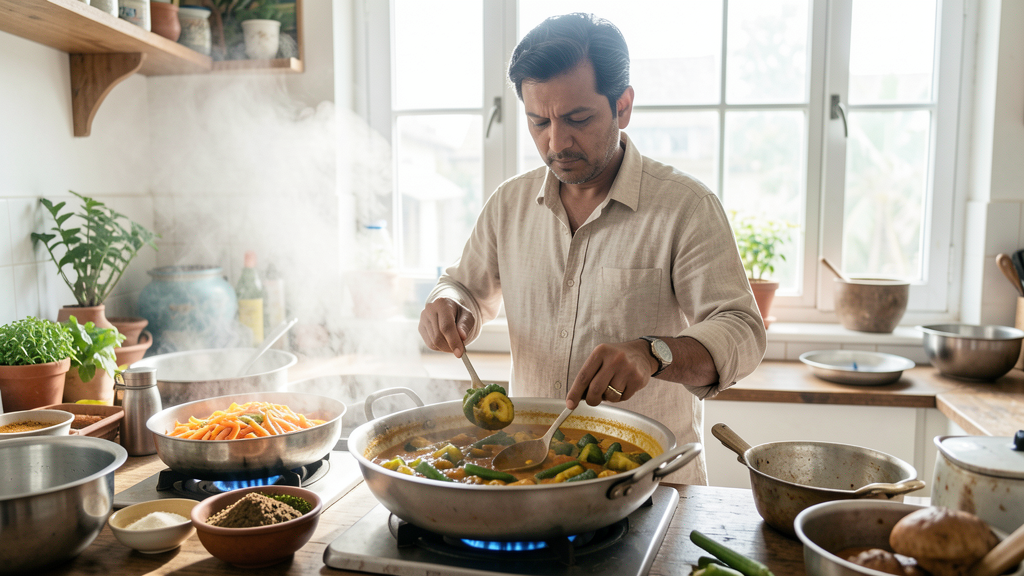
Learn how to use high-heat bhunao to evaporate moisture rapidly, ensuring your vegetable curries remain tender and textured rather than a soggy stew.
6 min read
 Practical guides to practical Indian cooking, spices and weekly curries
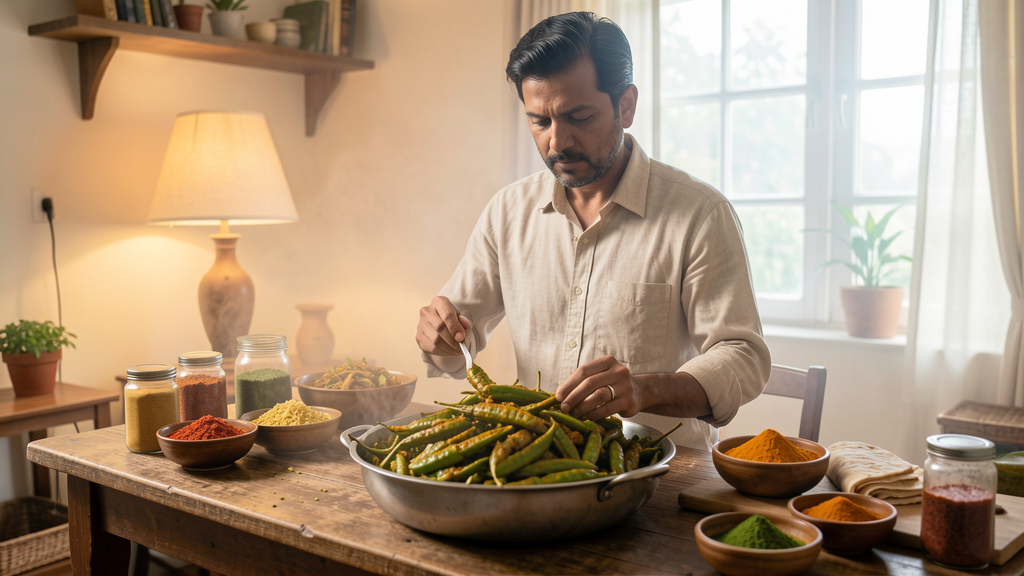
Achieve restaurant-style crunch in your okra without the oil splatter by using a specific salt and vinegar prep technique followed by high-heat pan roasting.
Editorial image illustrating Crispy Bhindi Without Deep Frying: The Salt-Vinegar Roast Method
Tuesday nights in my kitchen are strictly governed by the 45-minute rule. If a dish involves a wok full of hot oil, a splatter guard that barely works, and a ventilation system crying for help, it gets moved to the weekend roster. Bhindi has historically been a casualty of this rule. We all know that deep-fried bhindi masala is the gold standard for texture—those pods become glassy, crunchy, and utterly slime-free. But the cleanup is a nightmare, and frankly, heavy frying is the first thing I cut out when I want to eat lighter during the week.
I have spent the last two years testing ways to replicate that fried texture using a fraction of the oil. I tried air frying, which is decent but often results in a leathery, dry skin that lacks the succulence of a pan-roasted pod. I tried baking, which was a waste of electricity. The solution, I found, does not involve buying a new appliance. It involves a specific chemical manipulation using ingredients already in your pantry: salt and vinegar.
The primary reason home cooks struggle with crispy okra is moisture. Okra is 90% water, and that moisture wants to escape as mucilage (that dreaded slime) the moment heat hits it. If you crowd the pan, the okra steams in its own liquid. If the oil isn't hot enough, it soaks in instead of searing. By pre-treating the vegetable with salt and vinegar, we draw out surface water and slightly alter the pH to inhibit the slime development before the okra even hits the pan. This allows us to use a high dry-heat method that mimics the sear of a deep fry.
Here is the exact process I use to get crispy roast bhindi on the table in under 40 minutes.
This method fails before it starts if you buy the wrong okra. In 2026, the quality of produce in supermarkets can be hit or miss, often sitting in cold storage for weeks. You need pods that are vibrant green and snap audibly when you bend the tip. If they bend without breaking, they are old and woody, and no amount of vinegar will save them.
Wash the okra thoroughly to remove any grit. This is the only time water touches the vegetable. Once washed, you must dry them aggressively. I lay them out on a clean kitchen towel and roll them up, pressing firmly to absorb surface moisture. Then, I let them sit on the counter, uncovered, for 10 minutes while I prep my spices. Any residual water on the skin will turn into steam in the pan, leading to a soggy result.
Cut the tops and tails off. For the roast method, I prefer cutting the pods into halves lengthwise rather than rounds. Lengthwise cuts provide more surface area to touch the hot pan (the Maillard reaction zone) and allow the internal moisture to evaporate faster. If you are working with particularly large pods, quarter them lengthwise.
This is the critical step that differentiates this recipe from a standard stir-fry. In a large mixing bowl, combine your cut okra with 1 teaspoon of kosher salt and 1 tablespoon of distilled white vinegar for every 500 grams of vegetable.
Use your hands to toss this mixture, ensuring every piece is coated. The salt acts as a desiccant, pulling moisture out of the okra's cells through osmosis. The vinegar serves two purposes: the acid helps break down the slime, and the vinegar itself evaporates quickly, carrying away even more moisture as it heats.
Let this mixture sit for exactly 15 to 20 minutes. You will see a puddle of liquid at the bottom of the bowl. That is the slime and excess water you are removing from the equation. Do not skip this waiting period; it is the most important part of the process.
While the okra is curing, prepare your pan. You want a heavy, wide pan that retains heat well. A 12-inch cast iron skillet or a heavy-bottomed carbon steel wok is ideal. Avoid non-stick pans here; they do not conduct heat evenly enough for the high sear we need, and you cannot use metal spoons to agitate the vegetables without risking the coating.
Place the pan over medium-high heat. You want it smoking hot, but not to the point of burning your oil the second it hits. I usually use mustard oil for this dish because of its high smoke point and distinct, sharp flavor that cuts through the earthiness of the okra. If you find mustard oil too pungent, peanut oil or avocado oil are excellent alternatives. Add 2 tablespoons of oil to the pan.
Drain the liquid from the okra bowl. Do not rinse the okra. The light coating of salt remaining is necessary for seasoning. Toss the okra in the bowl with 1 tablespoon of cornstarch or chickpea flour (besan). This dusting acts as a moisture barrier and aids in the crisping process without forming a heavy batter.
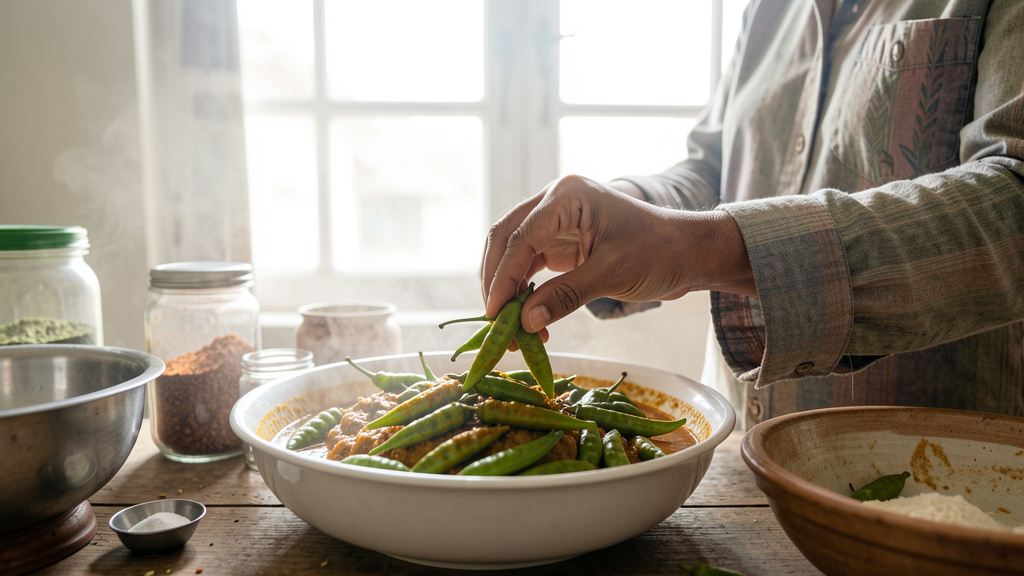
Add the okra to the hot pan in a single layer. You may need to do this in two batches depending on the size of your pan. Do not crowd the pan. If the okra is piled on top of each other, it will steam. We are looking for contact with the metal.
Once the okra is in the pan, leave it alone. This is where most people mess up. The instinct is to stir immediately. Resist it. Let the okra sear undisturbed for 3 to 4 minutes. You want a deep, charred brown color on the underside before you even think about moving it.
This high-heat searing is similar to the Bhunao technique for dry vegetables, where the goal is to cook off water and concentrate flavors rather than boil the ingredients. Listen to the pan; it should be hissing aggressively, not bubbling slowly.
After the underside has achieved a golden-brown crust, flip the pieces. Use a spatula or toss the pan if you are confident. Cook for another 3 to 4 minutes. At this point, the okra should be shrinking slightly, the edges should be curling, and the texture should feel crunchy when you test a piece.
Now, add your aromatics. I keep it simple to avoid introducing more moisture: 1 teaspoon of cumin seeds, 1/2 teaspoon of turmeric, and 1 teaspoon of coriander powder. Stir constantly for 60 seconds. The residual heat in the dry pan will toast the spices instantly, releasing their oils.
Finish with a generous pinch of amchur (dry mango powder) for tartness and red chili powder for color. Turn off the heat. Toss in a handful of chopped fresh cilantro.
I know many of you are tempted to just throw the salted okra in the air fryer. I’ve tested that side-by-side with this pan method. The air fryer circulates hot air, which dries the okra out, making it chewy and tough—like eating a rope. The pan method uses conductive heat from the metal. This creates a caramelized crust on the outside while keeping the inside tender and succulent. It is the difference between dried fruit and roasted fruit.
Furthermore, managing moisture in a pan allows you to make adjustments on the fly. If you see slime releasing, you can increase the heat to fry it off instantly. In an air fryer, that slime just dries into a gluey film on the basket.
If you follow this and still end up with slimy okra, check your vinegar quantity. Using too much vinegar can actually make the vegetable mushy if not drained properly. Conversely, using too little salt won't draw out enough moisture.
Another common error is covering the pan. Never cover the pan while cooking okra. You are trapping steam and undoing all the work you did drying the vegetable. This is a similar principle to keeping potatoes firm in Aloo Gobi; you must manage the water content aggressively to maintain structural integrity.
This dish is best served immediately, piping hot with hot rotis. The texture contrast between the soft bread and the crunch of the okra is unbeatable. If you have leftovers, store them in a paper towel-lined container in the fridge. The paper towel will absorb the condensation that forms overnight.
When reheating, do not use the microwave. It will turn your crispy roast into a rubbery mess. Throw the leftovers back into a hot dry pan for 2 minutes to revive the crunch.
Just like how Kasuri Methi transforms boring cauliflower, this roast method transforms a potentially slimy vegetable into a textural masterpiece. By respecting the water content of the ingredient and using salt and vinegar as tools rather than just seasonings, you can have a high-end curry experience on a weeknight timeline.

Learn how to use high-heat bhunao to evaporate moisture rapidly, ensuring your vegetable curries remain tender and textured rather than a soggy stew.
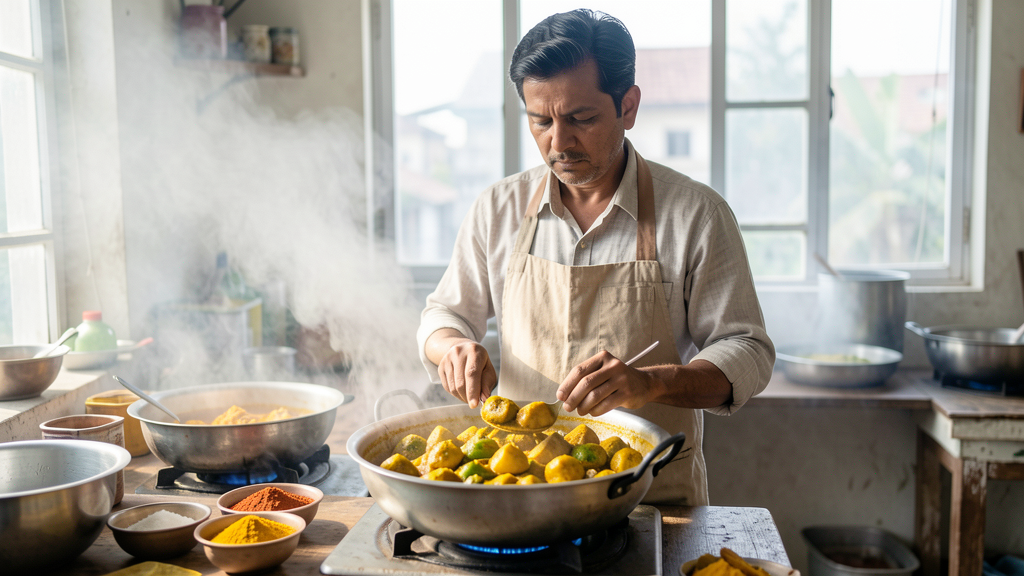
Stop mashing your dinner. Learn how a quick turmeric and salt bath creates a protective seal on potatoes, ensuring they stay whole and fluffy in dry curries.