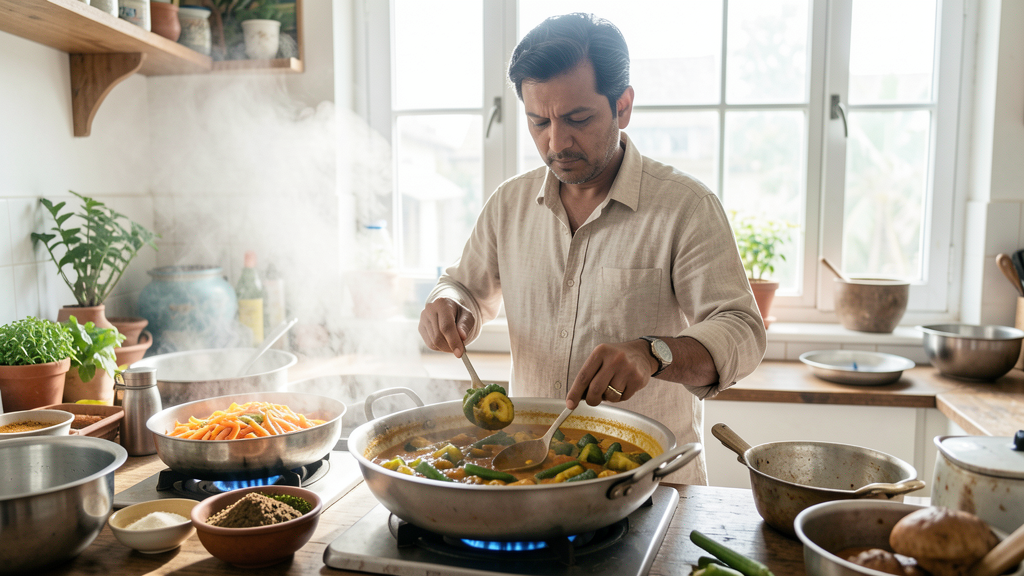
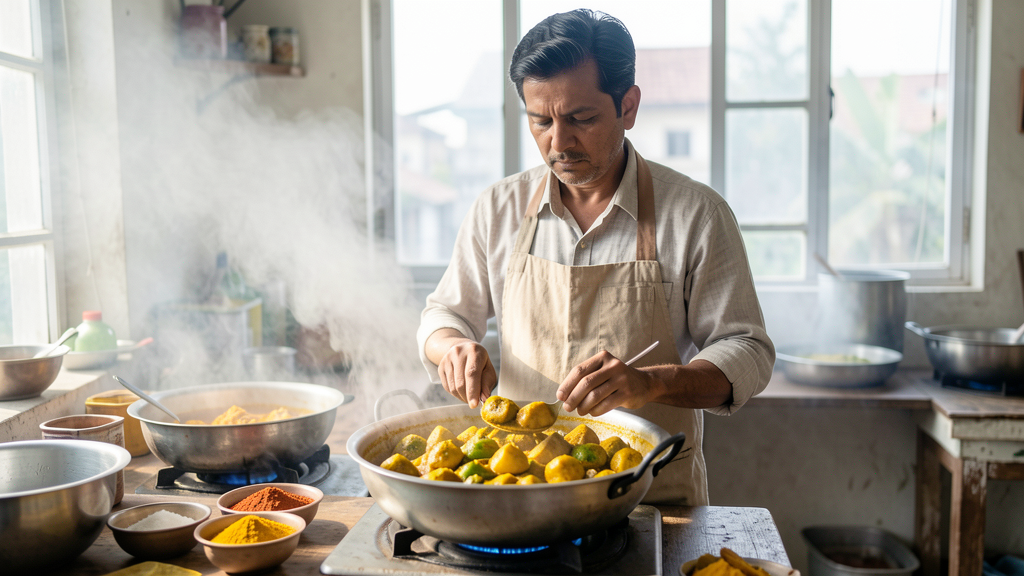
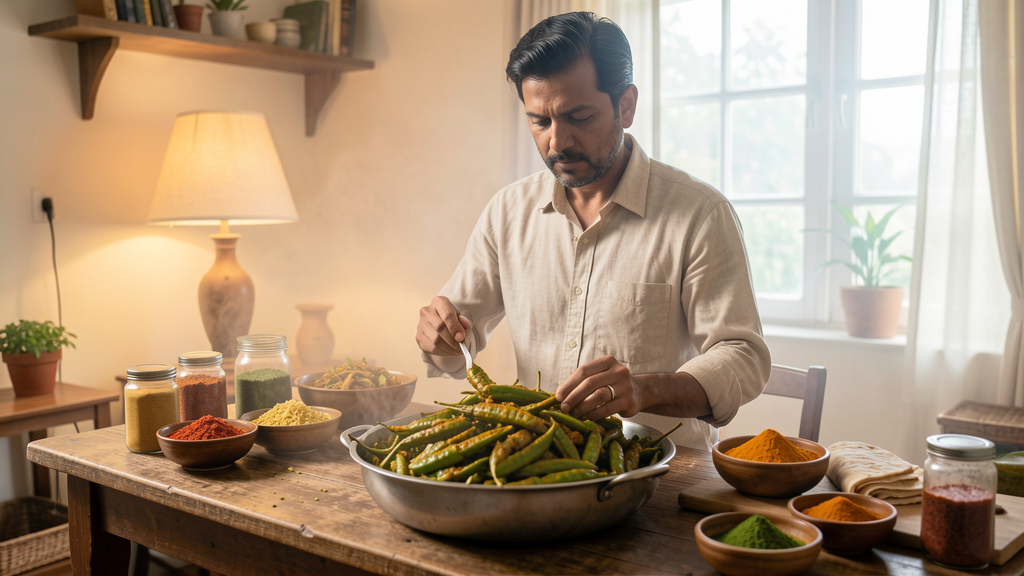
Editorial image illustrating Stop Steaming Your Dinner: Mastering High-Heat Bhunao for Dry Vegetables
The most common complaint I receive regarding weeknight vegetable curries has nothing to do with spice blends or sourcing ingredients. It is almost always about texture. You follow the recipe, you add the right amount of water, you cover the pot, and yet, fifteen minutes later, you are staring at a bowl of Aloo Gobi that resembles a thick porridge more than a structured dish. The vegetables are cooked, certainly, but they have lost their identity, collapsing into a uniform, soggy mush.
This issue stems from a fundamental misunderstanding of moisture management. In the realm of dry-vegetable-curries, water is not your friend; it is a necessary evil that must be evicted immediately. The solution to this texture crisis is a technique called bhunao. While often loosely translated as "sautéing" or "frying," bhunao is actually a precise process of high-heat evaporation. It is the act of cooking ingredients in hot fat while stirring continuously until the mixture releases its moisture, that moisture evaporates upon contact with the hot pan, and the solids begin to sizzle once again in the concentrated fat.
The Steam Trap
The physiological reaction most home cooks have when adding vegetables to a hot pan is fear. They see the oil spitting, they hear the aggressive hissing, and their instinct is to lower the heat and slap a lid on it to tame the chaos. This is the exact moment where the dish is lost. Vegetables are composed largely of water. When you apply heat, that water wants to escape. If you trap it with a lid, you create a steam environment. Steam is an efficient cooking medium, but it is the enemy of structure.
Consider the lowly potato. If you boil it, it becomes soft and waterlogged. If you roast it, the exterior becomes crisp and the interior fluffy. A dry curry aims for that roasted profile but in a fraction of the time. To achieve this, we must embrace the high heat. You need the pan to be hot enough that the moment the vegetable releases its internal water, the water turns to steam and leaves the pan instantly. If the pan is too cool, that water sits in the oil, creating a broth that boils the vegetables rather than frying them. This is the specific mechanism that turns distinct ingredients into a stew.
Managing the Sizzle Phase
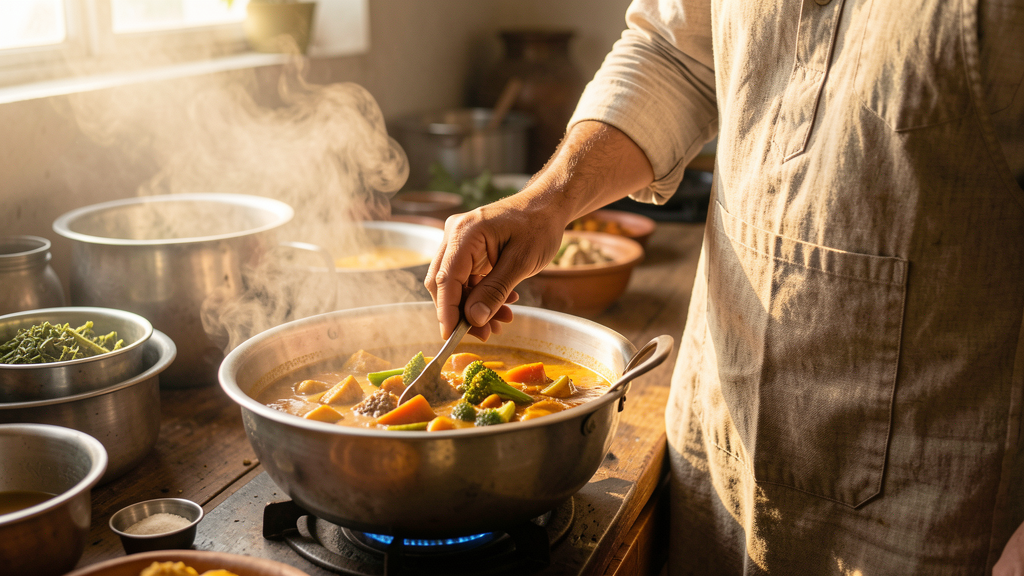
Executing bhunao requires active engagement. You cannot walk away to chop onions or check your phone. This is aggressive cooking. After you temper your cumin or mustard seeds in oil, you add your hardest vegetables first—potatoes, carrots, cauliflower stems. You toss them to coat in the fat, and then you wait. You will hear a loud, vigorous sizzle. This is the sound of moisture frying off.
Do not cover the pan. Let the water go. As the vegetables cook, the sound will change from a wet, aggressive hiss to a drier, crackling sound. This auditory cue is critical. It signals that the surface water has evaporated and the Maillard reaction—the browning of sugars and amino acids—is beginning. This browning is where the deep, nutty flavor of a dry curry lives. It is impossible to get this flavor if you steam the vegetables. If you are struggling with potatoes breaking apart before they crisp, you likely need to adjust your prep; keeping potatoes firm in Aloo Gobi often relies on cutting them into larger chunks so they survive this high-heat agitation.
The Risk of Burning vs. The Reward of Roast
The trade-off with high-heat bhunao is the risk of burning the spices. This is where the specific sequence of addition becomes vital. Many people dump turmeric, coriander powder, and chili powder in immediately after the vegetables. At high heat, these ground spices can scorch in seconds, turning bitter and acrid. The professional workaround is timing. You perform the initial bhunao with the raw vegetables and perhaps a bit of salt to help draw out moisture.
Once the vegetables have softened slightly and their surface water has evaporated, lower the heat to medium. Now, add your powdered spices. You then enter a second, shorter phase of bhunao. You stir the spices into the now-hot vegetables and the residual oil. You want to "cook the raw taste out of the spices," which takes about 60 to 90 seconds. The oil should separate slightly from the masala paste, coating the vegetable pieces in a glossy sheen. This separation is the visual signature of successful bhunao. If the mixture looks dry and dusty, add a teaspoon of oil, not water, to facilitate the spice bloom.
Does Every Vegetable Need This Approach?
While the principle remains constant, the intensity varies. Okra (Bhindi) is the ultimate test of bhunao. Because it is naturally mucilaginous, it requires maximum heat and constant movement to dry out that slime before it even begins to cook through. I have covered the specifics of this in my guide on crispy Bhindi without deep frying, where the roast method is essentially an extended bhunao.
Conversely, softer vegetables like green beans or peas require a shorter, sharper burst of heat. If you apply high-heat bhunao to peas for too long, they will wrinkle and shrivel, losing their sweetness. The key is modulation. You start with high heat to drive off the initial moisture, but you must possess the discipline to cut the heat the moment the vegetables are al dente. The residual heat of the pan will finish the cooking as you serve.
Creating the Dry Finish
The final 10% of the cooking time is where the dish transforms from "cooked vegetables" to "curry." Once the spices are fragrant and the vegetables are tender, I often finish with a sprinkling of a robust dried herb like Kasuri Methi (dried fenugreek leaves) or amchur (dry mango powder). These ingredients lack water and contribute acidity and bitterness that cut through the oil. For those looking to upgrade a standard cauliflower dish, turning boring cauliflower into a family favorite with Kasuri Methi is a strategy I endorse, as the dried leaves absorb the final traces of moisture and perfume the dish.
There is one final, unconventional step I take for the absolute best texture. After the curry is done, turn the heat to the highest setting for 20 seconds. Toss the vegetables violently. You are not trying to cook them further; you are flash-evaporating the last invisible micro-droplets of moisture on the surface of the pan. When you serve the dish immediately, the vegetables should have a matte, slightly tacky feel rather than a wet, shiny one. This is the hallmark of a weeknight master.
The Cleanup Trade-off
I will be honest: bhunao is messy. Because you are cooking at higher temperatures without a lid, oil splatter is inevitable. You will likely need to wipe your stovetop afterward. However, consider the alternative: a watery, flavorless curry that takes 20 minutes to cook and another 10 minutes to "reduce" because you added too much liquid to begin with. By managing the heat and refusing to steam your vegetables, you reduce the overall cooking time and active effort. You trade two minutes of stovetop wiping for a dish that actually tastes like it came from a restaurant, not a cafeteria. That is a bargain I am willing to make every Tuesday night.