Curry Base Mastery
The Texture Trap: 3 Ingredients That Ruin a Frozen Curry Base
Stop your Sunday meal prep from turning into a grainy, separated mess by keeping these three texture-destroying ingredients out of the freezer.
7 min read
 Practical guides to practical Indian cooking, spices and weekly curries
Stop suffering through jarred paste that tastes like tin; learn the single-serve freezing method that locks in the pungent kick of fresh aromatics for your daily tempering.
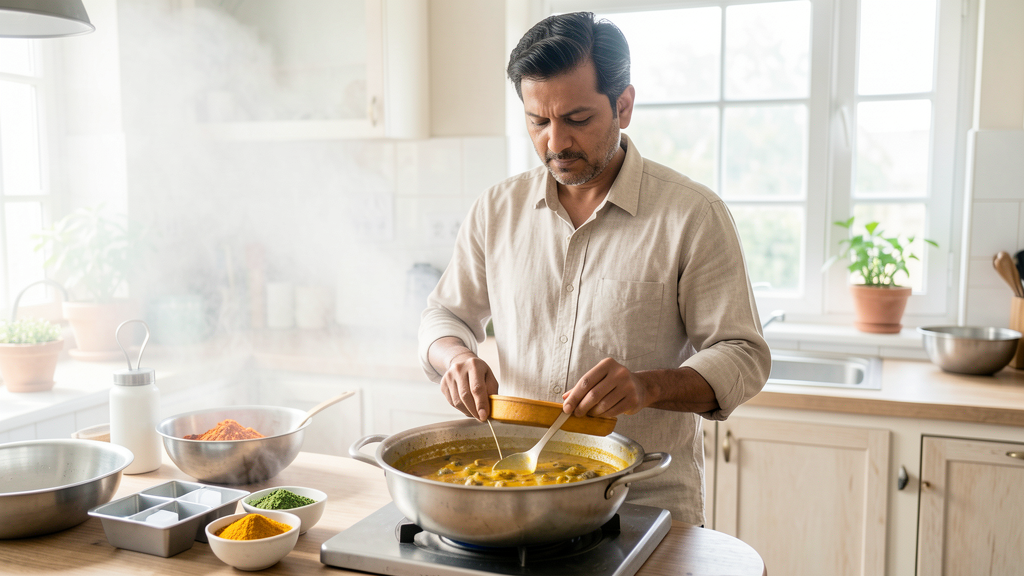
Editorial image illustrating Why Ice Cube Trays Save Your Curry Base from Metallic Failure
It is 7:30 PM on a Tuesday. You are tired. The onions are sweating in the pan, softening and turning translucent, but you are dreading the next step. You reach for the jar of garlic-ginger paste sitting in the refrigerator door. You know exactly what is going to happen. That sharp, acrid, almost metallic tang will hit the hot oil, overpowering the sweetness of the onions and masking the spices you carefully toasted. It is a flavor profile defined by vinegar and citric acid preservatives rather than the pungent, earthy heat of fresh rhizomes.
We have all been there. The convenience of store-bought paste is a siren song, but the sacrifice in flavor is massive. Conversely, peeling and mincing fresh garlic and ginger every single night is a luxury of time that most of us simply do not have in 2026. The middle ground—the method that actually delivers the fresh flavor without the daily labor—is sitting in your freezer aisle right now. It is not about buying a better product; it is about changing how you store the raw materials.
By utilizing ice cube trays to portion out a homemade paste, you eliminate oxidation entirely and create a "tempering-ready" ingredient that dissolves into hot oil with the same authority as fresh produce. This is not just about storage; it is about preserving the chemical integrity of allicin and gingerol, the compounds responsible for that aromatic punch we crave in Indian cuisine.
To understand why the freezing method works, we have to look at why the jar in your fridge tastes like a failure of industrial chemistry. Most commercial pastes rely on vinegar or acetic acid to prevent bacterial growth at room temperature or during prolonged refrigeration. While effective for shelf life, acid reacts with the volatile oils in garlic and ginger, creating that sharp, sour aftertaste that lingers on the palate long after the meal is over.
Furthermore, these jars are subject to the "double oxidation" problem. First, the paste is exposed to air during the manufacturing process. Second, every time you open the jar at home to scoop out a spoonful, you introduce new oxygen and bacteria, which accelerates spoilage and flavor degradation. You are essentially cooking with a product that is slowly rotting, stabilized only by harsh acids.
When making a rich gravy, perhaps using the technique for The Sunday I Made 2 Liters of Onion Masala and Saved My Week, introducing a metallic-tasting paste ruins the hours of effort spent caramelizing the onions. The base is the soul of the dish, and a compromised paste infects the entire pot.
The primary enemy of fresh garlic and ginger paste is air exposure. When you make a large batch and store it in a single container, you are constantly exposing the majority of the paste to air every time you open the lid. The surface turns grey, the flavor dulls, and bitterness sets in.
Portioning the paste into ice cube trays solves this by creating individual air-tight environments once frozen. Each cube represents a single serving, usually about one tablespoon, which is the standard requirement for most curries serving four people. You use exactly what you need, leaving the rest hermetically sealed in the freezer, untouched and unoxidized.
This method also allows for a specific texture adjustment. By adding a small amount of oil to the blend before freezing, you coat the aromatics in fat. Fat is a better conductor of flavor than water, and since oil freezes at a lower temperature than water, the cubes remain easy to chip or pop out of the tray even after weeks in the freezer. This oil-capping layer also provides an immediate medium for frying when you toss the cube into your pan, ensuring the garlic and ginger fry rather than boil.
This process takes about twenty minutes active time on a Sunday afternoon and yields enough paste for a month of intensive cooking. Do not rush the peeling phase; removing the skin cleanly ensures you do not end up with bitter fibrous bits in your final curry.
Step 1: Establish the Ratio and Weight For a balanced paste that leans neither too heavily into the spicy heat of garlic nor the sharp sweetness of ginger, use a 1:1 ratio by weight. For a standard household batch, purchase 250 grams of garlic and 250 grams of ginger. This quantity fits perfectly into two standard silicone ice cube trays. Select ginger that is firm, with thin skin, and avoid garlic that has begun to sprout, as the green germ inside adds an unwanted bitterness.
Step 2: High-Volume Peeling Do not peel each clove individually by hand if you can avoid it. For the garlic, place the cloves in a metal bowl, invert a second metal bowl of the same size on top to create a dome, and shake vigorously for thirty seconds. The friction will separate the skin from the cloves. For the ginger, use the edge of a spoon to scrape off the skin; it is far more efficient than a vegetable peeler and wastes less flesh. Cut the ginger into small coins to make processing easier.
Step 3: The Blend with Oil Place the garlic and ginger into a food processor or high-powered blender. Add two tablespoons of neutral oil—canola, grapeseed, or a light olive oil work well. Do not add water. Water promotes ice crystal formation, which ruptures cell walls and leads to a mushy texture upon thawing. Pulse the machine until you achieve a fine, homogenous paste. It does not need to be perfectly smooth; a slight texture is actually desirable for rustic curries.
Step 4: Portion with Precision Spoon the paste into your silicone ice cube trays. Fill each well nearly to the top, but leave about two millimeters of space for expansion. Liquids expand when frozen, and overfilling can cause the cubes to fuse together, making them difficult to remove later. Tap the tray firmly on the counter two or three times to release any air bubbles trapped in the paste. Air bubbles are pockets of oxidation waiting to happen.
Step 5: The Rapid Freeze Place the trays in the coldest part of your freezer, usually the back bottom shelf, for at least four hours or ideally overnight. You want the paste to freeze through completely. Rapid freezing helps maintain the cellular structure of the aromatics, preserving the potency of the essential oils. Once solid, flex the silicone tray to pop the cubes out and transfer them into a freezer-safe Ziploc bag. Press the air out of the bag before sealing. Label the bag with the date; this is crucial for maintaining quality standards.
There is a common misconception that freezing destroys the flavor of aromatics. While it is true that the texture changes slightly—the paste becomes slightly softer once thawed—the chemical compounds responsible for flavor remain remarkably stable at sub-zero temperatures. In fact, freezing pauses the enzymatic breakdown that occurs at room temperature, "locking in" the flavor profile at the moment of processing.
However, you must respect the chemistry. We discuss ingredient stability frequently when addressing 3 Ingredients That Ruin a Frozen Curry Base. The addition of oil in Step 3 is critical here because garlic and ginger contain water-soluble and fat-soluble flavor compounds. Without the oil, the water-soluble compounds can degrade faster due to freezer burn. The oil acts as a protective barrier, ensuring that when the cube hits the hot pan, the aromatics bloom immediately.
It is important to manage your expectations regarding usage. This frozen paste is exceptional for cooked applications—curries, stir-fries, soups, and marinades. It is not suitable for raw applications, such as a green chutney or a salad dressing, where the texture of the thawed paste would be noticeably softer and slightly less crisp than freshly minced items. For 90% of your daily cooking, though, the difference is imperceptible.
To ensure your paste lasts the full six months without losing its potency, you need to treat your freezer storage with the same discipline you apply to your spice rack. Essential oils are volatile; they escape into the air if given the chance.
First, minimize the time the freezer door is open. Fluctuating temperatures cause the cubes to thaw slightly and refreeze, creating larger ice crystals that damage the paste's structure. Second, store the bag of cubes in a dedicated corner, away from strong-smelling foods like fish or meat. Garlic and ginger are pungent, but they can absorb odors from neighbors, leading to a strange, off-flavor in your dal.
If you notice any white frost developing on the cubes inside the bag, that is freezer burn. It is not unsafe, but it indicates that air has infiltrated the bag and the flavor is degrading. Use these cubes first, or accept that they will be milder than expected. Ideally, using a vacuum-sealed bag is the superior method, but a standard Ziploc with the air manually pressed out works sufficiently for a three-month supply.
When you are ready to cook, do not thaw the cube. Toss it directly from the freezer into the hot oil or ghee. It will sizzle and melt rapidly, frying in its own rendered oil. This technique preserves the essential oils because they are released directly into the hot fat, vaporizing into the air and infusing your kitchen with that unmistakable curry aroma.
The ultimate goal of this method is frictionless cooking. When you begin your tempering, the process should be smooth. You heat your oil, add your cumin or mustard seeds, and as they sputter, you drop in the frozen cube. It melts within seconds. You then add your powdered spices. Because the paste contains oil, it helps carry the turmeric, coriander, and chili powder, preventing them from burning instantly.
This seamless integration is particularly useful when you are building complex bases. For example, if you are experimenting with the Maillard reaction as described in The Science of Browning Onions: Golden vs. Dark Brown Paste, having your aromatics ready to go allows you to focus entirely on the color of the onions without worrying about mincing garlic at the same time.
Consider the alternative: stopping the cooking process to wash a cutting board, peel garlic, get sticky fingers, and clean the mincing tool. By the time you are done, your onions might have burned. The cube method keeps you in the flow state. It turns a potential bottleneck into a seamless step.
This approach also solves the "too much heat" or "too much bite" inconsistency that plagues jarred pastes. Because you made it, you control the ratio. If you prefer a sweeter curry, increase the ginger ratio to 60% ginger and 40% garlic in your next batch. If you like a sharp, aggressive garlic punch, flip the ratio. Customization is impossible with commercial products, but it is the standard here.
Once you have mastered the basic garlic-ginger paste, consider the "spiced cube" variation. Add a handful of fresh green chilies to the blender in Step 3. This creates a "G-G-C" (Garlic-Ginger-Chili) paste, which is a foundational shortcut for many home-style Indian dishes. Having a spicy version and a mild version in the freezer gives you incredible flexibility for weeknight meals.
Another pro-tip involves silicone lids. If your ice cube trays came with lids, use them during the freezing process. If not, press a sheet of plastic wrap directly onto the surface of the paste before freezing. This extra barrier against air during the initial freezing phase can extend the shelf life by an additional month, keeping the taste as fresh as the day you made it.
We often obsess over complex spice blends, but the foundation of a great curry is usually much simpler. It is the quality of the base aromatics. By moving away from the preservative-laden jars and embracing the ice cube tray method, you reclaim the flavor profile of your food. You eliminate the metallic tang and replace it with the clean, honest taste of fresh ginger and garlic, preserved at their peak.
The real value of this technique is not just in the flavor it preserves, but in the mental bandwidth it frees up. Knowing you have a dozen "flavor bombs" waiting in the freezer removes the decision fatigue of weeknight cooking. It bridges the gap between the aspirational cook who wants fresh flavors and the realist who needs dinner on the table in thirty minutes.
This method does not require expensive equipment or obscure ingredients. It requires a twenty-minute investment on a Sunday. In return, you get six months of consistently excellent curries. That is a trade-off worth making, and it is the kind of practical kitchen hack that makes daily Indian cooking sustainable and joyful.

Stop your Sunday meal prep from turning into a grainy, separated mess by keeping these three texture-destroying ingredients out of the freezer.

A detailed account of how one Sunday afternoon spent browning onions and portioning curry base reclaimed hours of weekday downtime and lowered kitchen stress.