Curry Base Mastery
The Sunday I Made 2 Liters of Onion Masala and Saved My Week
A detailed account of how one Sunday afternoon spent browning onions and portioning curry base reclaimed hours of weekday downtime and lowered kitchen stress.
9 min read
 Practical guides to practical Indian cooking, spices and weekly curries
Stop skimping on the stove time; discover exactly how sugar caramelization at the dark brown stage creates the non-negotiable sweetness for authentic Mughlai gravies.
Editorial image illustrating Golden vs. Dark Brown: The Onion Chemistry That Defines Mughlai Curries
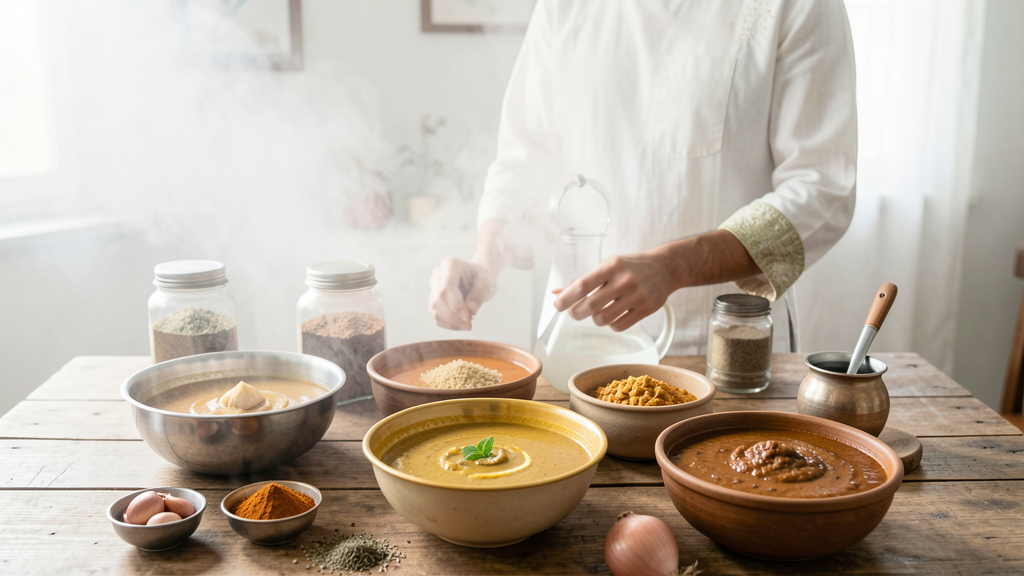
I see the hesitation constantly. You have sliced your three large onions, heated the oil, and after ten minutes of sautéing, they look translucent and soft. The aroma is pleasant, the kitchen smells inviting, and the temptation to dump in the ginger-garlic paste and tomatoes is overwhelming. You think, "This is good enough."
If you are making a quick stir-fry or a light vegetable dal, that might be true. But if you are attempting a rich Mughlai dish—a butter chicken, a korma, or a shahi paneer—stopping at the "golden" stage is the primary reason your curry tastes like it is missing a heartbeat. The depth you are chasing lives in the chemistry of the dark brown paste, a state achieved only through the breakdown of sugars that most home cooks skip entirely.
We often talk about browning as a monolithic process, but what happens in your pan in the first twenty minutes is chemically distinct from what occurs in the final ten. When onions turn pale gold and soft, you are witnessing the Maillard reaction—a reaction between amino acids and reducing sugars. This creates savory, nutty, and toasty flavor compounds. It is delicious, but it is primarily savory.
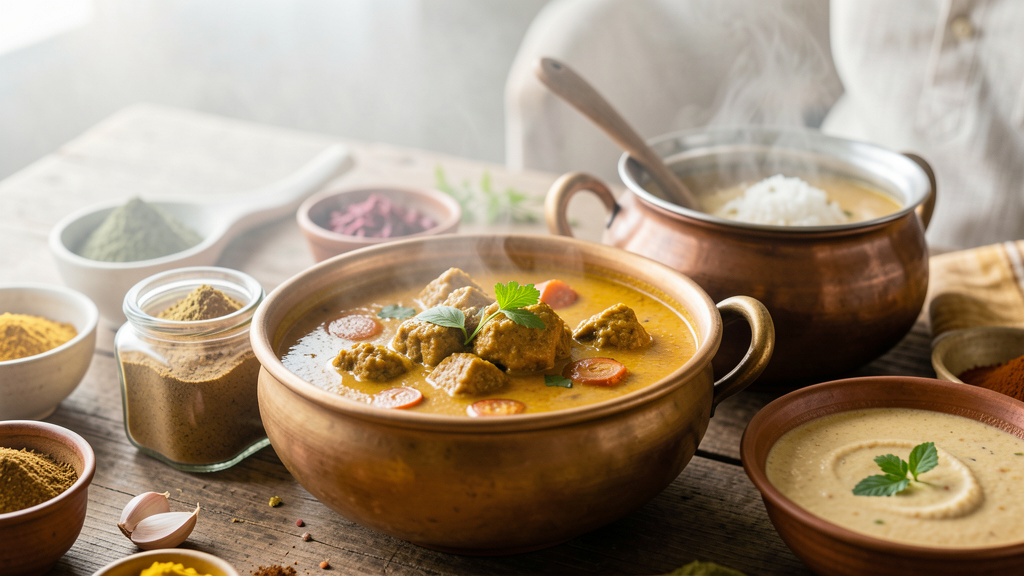
However, onions are surprisingly high in sugar, containing nearly 5% sucrose by weight depending on the variety. To unlock the profound sweetness required for Mughlai cuisine, you must push past Maillard into true caramelization. This occurs when the onions turn a deep, sticky brown, almost bordering on chocolate. At this stage, around the 35 to 40-minute mark on medium-low heat, the sucrose molecules break down into glucose and fructose, eventually forming complex, bitter-sweet compounds known as caramelans. This is the "dark brown paste."
You cannot rush this with high heat. High heat burns the exterior before the interior breaks down, leaving you with bitter ash and raw centers. The transformation requires patience to allow the water content to evaporate completely so the temperature of the onions themselves can rise enough to caramelize without scorching.
The specific flavor profile of Mughlai cooking relies on a delicate balance between intense richness and a mellow, underlying sweetness. This is not the sugary taste of dessert; it is a rounded, earthy sweetness that acts as a buffer for the heavy spices.
Consider a traditional Shahi Korma. The recipe calls for poppy seeds, cashews, cream, and aromatic spices like cardamom and mace. If you add these rich, floral ingredients to a base of only golden onions, the result will taste sharp and one-dimensional. The savory notes of the Maillard reaction clash with the cream.
By using dark brown onion paste, you introduce that molasses-like depth. The caramelized sugars coat the palate, binding the fatty cream and the aromatic spices together. It transforms the sauce from a "spiced cream soup" into a cohesive gravy with layers that unfold. I have tested this side-by-side in my kitchen: the same ingredients, same timing, but one with golden onions and one with a paste browned for 45 minutes. The dark brown version tasted restaurant-quality; the golden version tasted like a Tuesday night experiment.
I know the argument: "I don't have 45 minutes to stand over a stove on a Wednesday." The result is that many cooks turn to shortcuts that actively damage the flavor profile. One common hack is adding baking soda to the onions to speed up browning. While this chemically browns the onions faster by raising the pH, it produces a soapy, metallic taste that destroys the delicate balance of a Mughlai dish.
Another mistake is adding water to speed up the cooking, which essentially boils the onions rather than frying them. You end up with a gray, mushy mixture that lacks the concentrated flavor needed for the base. If you are worried about the onions sticking to the bottom of the pan as they dry out, add a splash of water only to deglaze the browned bits stuck to the pan, then let it cook off again.
If the time constraint is real, the solution is not to rush the process but to change when you do it. The Sunday I Made 2 Liters of Onion Masala and Saved My Week changed how I approach weeknight cooking. By making a large batch of properly browned paste in advance, you freeze the flavor. You can pull out a scoop of this deeply caramelized base and have that Mughlai depth in a fraction of the time.
When investing time in creating these complex flavor bases, protecting the aromatic integrity is non-negotiable. If you are adding your dry spices—such as Kashmiri chili powder or turmeric—directly into the hot oil with your onions, be mindful of their volatility. These spices contain volatile essential oils that dissipate quickly if exposed to high heat for too long.
Once your onion paste has reached the desired dark brown stage, remove the pan from the heat for at least 60 seconds before adding your powdered spices. This "cooling" period lowers the temperature enough to bloom the spices without burning them, preserving their essential oils. If you are making a large batch of onion masala to store, cool the mixture completely before transferring it to airtight containers. When frozen, this paste maintains its caramelized profile for months, ensuring that the chemical work you did at the stove doesn't go to waste.
There is one caveat to the dark brown method: texture. To achieve this level of browning, the onions must disintegrate. You will not have identifiable soft onion slices in your final curry. The onions effectively dissolve into the sauce, acting as a thickening agent and a flavor bomb rather than a vegetable component. For some regional curries where you want the bite of an onion wedge, this technique is wrong. But for Mughlai gravies, which aim for a velvety, homogenous texture, this disintegration is exactly what makes the sauce feel luxurious.
If you are trying to thicken a gravy without reaching this paste stage, you might fall into the trap of adding unnecessary thickeners. Many home cooks believe they need heavy amounts of cream or nuts to achieve body. In reality, a properly browned onion paste provides significant natural viscosity. Myth: You Need Cashews to Thicken a Rich Gravy is something I address often because the pectin and concentrated fibers in the onions do half the work for you, provided you cook them long enough.
If you decide to batch-cook and freeze your dark brown paste, remember that oxidation is the enemy of flavor. Press a small piece of plastic wrap directly onto the surface of the paste before sealing the container to minimize air exposure. This simple step protects the caramelized compounds from oxidizing and turning rancid. Additionally, be aware of what you pair with your frozen base. 3 Ingredients That Ruin a Frozen Curry Base often surprises people, as high-water-content vegetables can turn your meticulously browned paste into a watery slurry upon reheating.
Reaching for the dark brown stage is an act of faith. You stare into a pot of what looks like potentially burnt vegetables for twenty minutes, trusting that the chemistry will turn the corner. Once you taste that first spoonful of a curry made with the deep, mahogany paste, you will realize that the sweetness was there all along, just waiting for you to cook it into existence.

A detailed account of how one Sunday afternoon spent browning onions and portioning curry base reclaimed hours of weekday downtime and lowered kitchen stress.
Stop your Sunday meal prep from turning into a grainy, separated mess by keeping these three texture-destroying ingredients out of the freezer.