Weeknight Curries
Myth: You Cannot Make Good Curry Without a Pressure Cooker
Ditch the expensive gadgets and learn how high-heat wok techniques can deliver tender, flavorful chicken curries in just twenty minutes.
6 min read
 Practical guides to practical Indian cooking, spices and weekly curries
A detailed breakdown of how I fed a family of four a rich chicken curry for R$ 50 by swapping expensive breast meat for bone-in cuts and optimizing pantry staples.
Editorial image illustrating The R$ 50 Chicken Curry Experiment: Beating Takeout with Bone-In Cuts
Last Tuesday, I stood in the checkout line at my local grocer in Vila Madalena, staring at the receipt in my hand. The total was R$ 48.70. In my bag, I had everything needed for a proper chicken curry that would feed me, my wife, and our two kids. Later that evening, as I browsed delivery apps, I saw that the average "Family Bucket" from a popular Indian chain would cost me R$ 89.90, plus a R$ 10 delivery fee and a mandatory R$ 5 tip.
We often accept the myth that cooking Indian food at home is a luxury—something reserved for weekends when we have hours to simmer sauces and money to burn on expensive saffron or cashews. But the reality of 2026 is that food prices have climbed, and eating out is becoming a luxury item. The challenge I set for myself wasn't just about saving money; it was about breaking the psychological barrier that home cooking is "too expensive" compared to the convenience of takeout.
The key to beating the system lies in a single, crucial swap that changes the economics of the entire dish: ditching the boneless breast.
The math starts before the food hits the pan. For years, home cooks in Brazil have gravitated toward peito de frango (boneless breast) because it is perceived as clean, healthy, and easy to handle. It is also the most expensive cut by a wide margin. This week, the boneless, skinless breast at my local açougue was retailing for R$ 38.90 per kilo. To feed a family of four with a curry-heavy meal, you generally need about 600g to 700g of meat to ensure everyone gets a solid portion. That means just the protein would cost you roughly R$ 27.00 before you even buy an onion.
I walked two steps to the next counter and looked at the mixed chicken cuts—legs and thighs, bone-in, skin-on. The price tag? R$ 18.90 per kilo. That is nearly half the price of the breast meat. I bought 800 grams for R$ 15.12. This wasn't just about saving R$ 12 upfront; it was about volume and flavor yield.
Bone-in cuts have collagen and connective tissue. When you cook them, that collagen breaks down into gelatin. This gelatin thickens your sauce naturally, giving you a rich, velvety texture that you usually have to achieve by adding cream, coconut milk, or butter. Those are expensive additions. By using the chicken itself to create the body of the sauce, I save money on fats and thickeners later.
There is a hidden tax we pay for boneless meat: the convenience tax. We pay the butcher to remove the bones and skin. But in a curry, removing the bone is actually a disservice to the final dish. If you have read my work on weeknight-curries, you know I am obsessive about depth of flavor. The marrow inside the bones leaches out during the simmering process, adding a savory complexity that boneless white meat simply cannot replicate.
White meat is also unforgiving. It dries out in ten minutes. To keep boneless chicken edible in a quick curry, you often have to poach it separately or add it at the very end to prevent it from becoming rubbery. Bone-in thighs, however, are patient. They can withstand 20 minutes of a rolling boil or a pressure cook session and come out succulent. This patience allows you to dump everything into one pot, reducing both active cooking time and cleanup.
I want to be transparent about exactly where the money went. I did not have a fully stocked pantry of expensive saffron or imported ghee; I used what most practical homes have, with prices adjusted for current market averages in São Paulo.
The Protein:
The Aromatics & Base:
The Spices (Buying in bulk makes this cheaper, but estimated single-use cost):
The Oil & Finish:
The Rice (Essential for the "full meal" calculation):
Total: R$ 48.70
This breaks down to R$ 12.17 per person. If I had bought boneless breast, the meat alone would have pushed this budget over R$ 60, not including the extra cream or yogurt needed to fix the dryness. I have written before about how Coconut Milk vs. Yogurt: Which Base Handles Leftovers Better?, and for this budget, yogurt is usually the cheaper acidifier, but honestly? With these bone-in pieces, I didn't need it. The sauce was rich enough on its own.
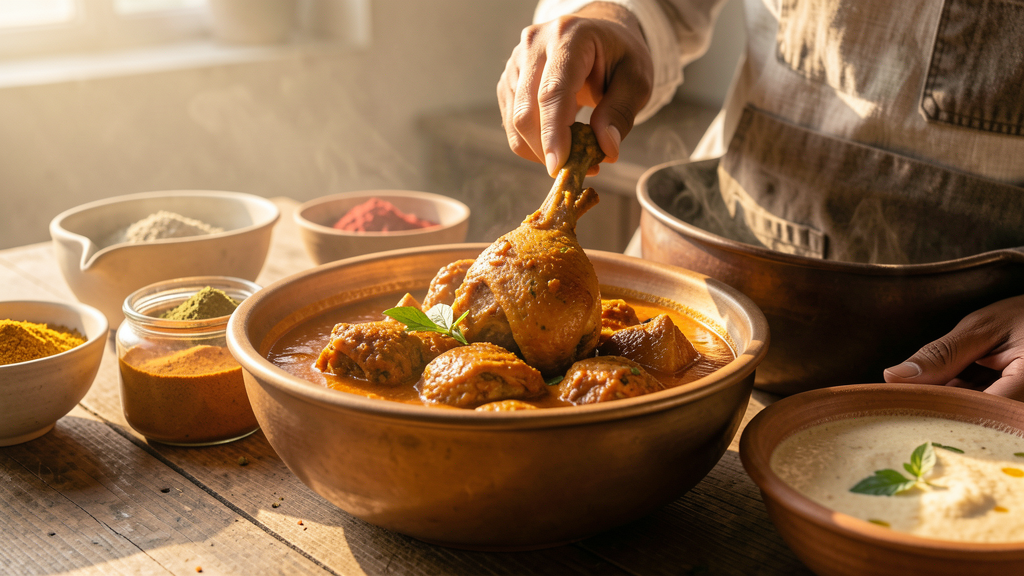
The biggest objection to bone-in chicken is the cooking time. People assume bones mean hours of stewing. That is false if you manage your cuts correctly. I cut the legs at the joint, separating the drumstick from the thigh. If the thigh is large, I slice it in half through the bone. This increases the surface area and allows the heat to penetrate the marrow faster.
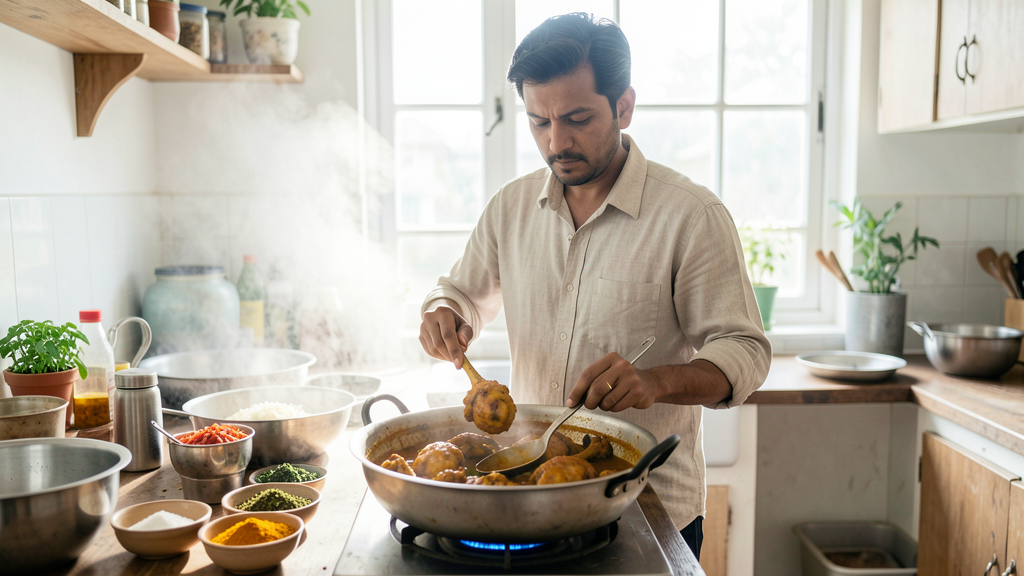
I heated my oil in a deep Dutch oven. I tossed in the whole spices—cumin and cardamom—until they sputtered, then added my onions. The onions must be golden. This is non-negotiable. If you rush the onions, your curry will be pale and sharp. Once the onions were sticky and brown, I added my ginger-garlic paste. The smell hit the kitchen instantly.
Then went the chicken pieces. I seared them hard on high heat for three minutes. I wanted the skin to blister and the meat to grab the color of the turmeric and chili. Then, I dumped in the chopped tomatoes and a splash of water.
Here is where the weeknight magic happens. I covered the pot, turned the heat down to medium-low, and set a timer for 20 minutes. That was it. I didn't stir it every minute. I didn't hover. I let the steam trapped in the pot do the work.
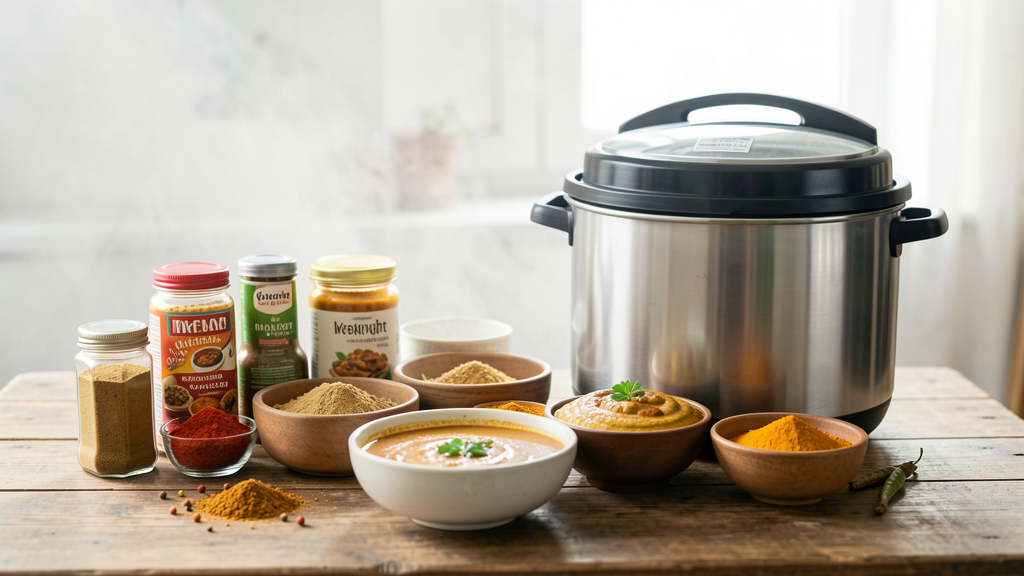
If you are nervous about time, the bone-in cuts actually make the dish faster to assemble than a tikka masala where you have to marinate, grill, and then simmer the meat. You could also use a pressure cooker to cut this time in half, though I often argue against relying on gadgets. For those interested, I covered the debate on whether Myth: You Cannot Make Good Curry Without a Pressure Cooker holds up.
A curry is lonely without rice. You cannot serve a family a bowl of gravy and call it dinner. The rice I bought, Agulhinha (a long-grain variety common in Brazil that mimics Basmati reasonably well for daily cooking), cost R$ 12.50 a kilo. I used 400g, which expands significantly when cooked.
The critical error people make here is cooking too much rice or using expensive "convertido" or specialty rice for a weeknight meal. Standard long-grain rice, cooked with a pinch of salt and a drop of oil, acts as a filler that stretches the curry. If you nail the One-Pot Rice and Curry Ratio Explained, you can actually cook the rice in the same pot as the curry's residual sauce, saving on water, gas, and washing up liquid.
By cooking 400g of rice, I ensured there were seconds for everyone. The starchy rice soaks up the thinner parts of the gravy, making every bite cohesive. The "richness" of the meal comes from the chicken fats and the onion base, but the "fullness" comes from the carbohydrates.
After 20 minutes of simmering, I checked the pot. The oil had separated from the masala—a sign of proper bhunao—and the chicken was tender enough to pull off the bone with a fork. I finished it with a sprinkle of garam masala (stored in my freezer) and the chopped cilantro.
We sat down. My son, who usually claims he "doesn't like bones," ate two drumsticks because the meat was falling off the bone. My wife asked if I had used cream because the gravy looked thick. I hadn't.
The total active prep time was 15 minutes. The passive cooking time was 20 minutes. The cleanup involved one pot, one cutting board, and a knife. We were done eating by 7:45 PM.
If I had ordered takeout, I would have spent R$ 105.00. I would have waited 60 minutes for a delivery driver. I would have accumulated plastic containers that clutter my bin. By spending R$ 48.70 and 45 minutes of my evening, I saved R$ 56.30. Doing this just three times a week saves nearly R$ 700.00 a month.
But the saving isn't just the money in the bank. It is the control over the salt, the quality of the oil, and the knowledge that I am feeding my family something that provides sustenance rather than just filling a void. The switch to bone-in meat is the single most effective financial lever a home cook can pull. It forces you to cook slower, better, and cheaper.
I will not pretend this is as convenient as opening a styrofoam box. There is a barrier to entry: you have to touch raw meat with bones, and you have to be comfortable eating with your hands or navigating a bone on a fork. If your family is strictly "clean-eating" in the sterile, Western sense of boneless, skinless, boiled chicken breast, this transition will be rough.
However, flavor lives in the bone. Economy lives in the bone. To reject bone-in meat is to pay a premium for a sterile eating experience that offers diminishing returns on taste. The R$ 50 curry isn't a survival tactic; it is a return to the roots of what makes a curry satisfying. It proves that you don't need a heavy wallet to eat like a king, you just need the patience to let a bone do its job.
Next time you are at the butcher, ignore the neat piles of breast meat. Ask for the messy, mixed cuts. Your wallet, and your palate, will be better for it.

Ditch the expensive gadgets and learn how high-heat wok techniques can deliver tender, flavorful chicken curries in just twenty minutes.
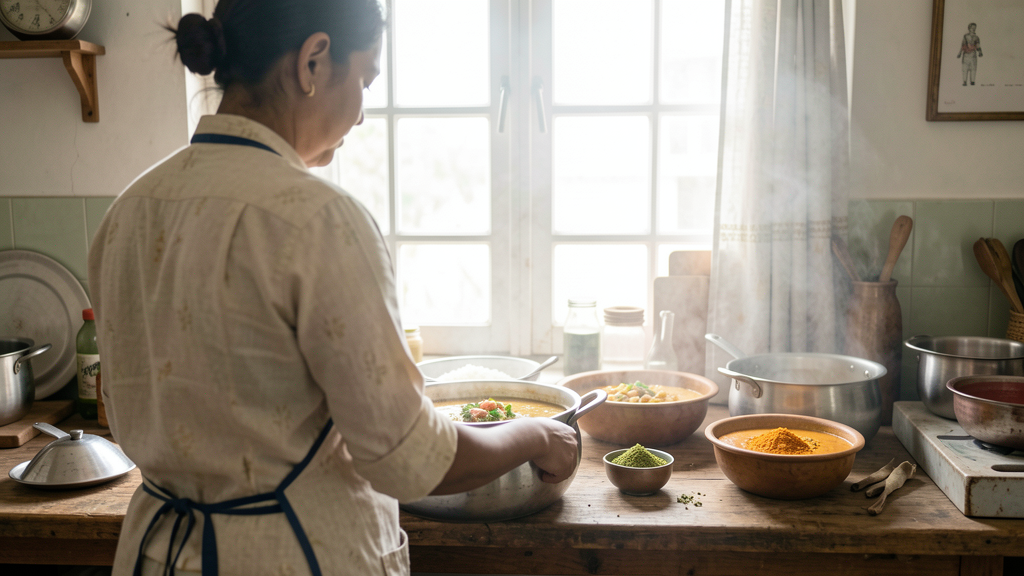
Master the precise water calculation required to cook protein and rice simultaneously, ensuring firm grains and tender meat in under 40 minutes.