Weeknight Curries
The 20-Minute Egg Curry Protocol: No Slow Simmering Required
Transform pre-boiled eggs and a blitzed onion-tomato base into a rich, protein-heavy curry in just 20 minutes using this high-heat, assembly-only method.
6 min read
 Practical guides to practical Indian cooking, spices and weekly curries
Ditch the expensive gadgets and learn how high-heat wok techniques can deliver tender, flavorful chicken curries in just twenty minutes.
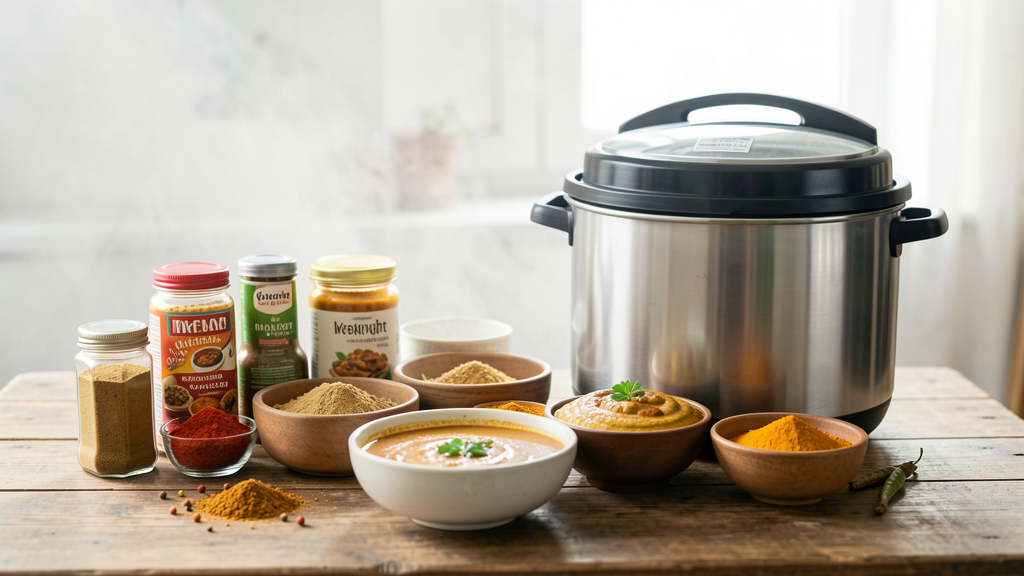
Editorial image illustrating Myth: You Cannot Make Good Curry Without a Pressure Cooker
Last Tuesday, I watched a friend stare hopelessly at a raw chicken thigh on his cutting board. He was exhausted from a ten-hour shift, and the only thing standing between him and a hot meal was his stubborn belief that cooking "real" curry required a pressure cooker he didn't own and wasn't about to buy. He ordered pizza instead. This is a tragedy I see repeated constantly in 2026: the assumption that Indian cuisine is mechanically locked behind high-pressure steam valves.
We have been sold a story that traditional weeknight cooking is impossible without the hiss of a sealed pot. It is a brilliant marketing campaign for appliance manufacturers, but it is a lie when it comes to 95% of the curries we actually want to eat on a Tuesday. If you can cook an egg, you have the physics required to make a stellar curry.
The most common argument for the pressure cooker is speed. The claim is that without 15 PSI of pressure, you are tethered to the stove for hours. This ignores the basic mechanics of how we cook chicken. We are not breaking down collagen in beef shanks; we are cooking lean protein that fibers tighten and relax rapidly.
When you factor in the time it takes for an electric pressure cooker to come to pressure—which can be ten to fifteen minutes depending on the volume of liquid—you are already halfway to dinner. A traditional open-pan method, specifically using a wide, high-heat vessel like a wok or a kadhai, actually cooks faster for chicken curries.
I ran a test last week with a simple Kadhai Chicken. In a carbon steel wok over high heat, bite-sized chicken pieces sear and cook through in roughly six minutes. The sauce thickens via reduction rather than pressurized boiling, which concentrates flavors three times faster than the diluted steaming inside a cooker. If you are cooking chicken, goat, or vegetables, the pressure cooker is not saving you time; it is just removing you from the sensory process of cooking.
There is a pervasive fear that without a pressure cooker, your chicken will be dry, rubbery, or raw. This is true if you treat the wok like a slow cooker. The rubbery texture comes from low-and-slow boiling without pressure. To get that falling-apart tenderness in twenty minutes without a gadget, you have to invert the cooking logic.
The trick is understanding the carryover cooking and the steam-fry method. You start with high heat to sear the exterior of the meat, locking in juices. Then, you add your liquid base—tomatoes, stock, or water—and clamp the lid down on your wok or heavy skillet. You are essentially creating a low-pressure steam environment. The liquid boils at 100°C, the trapped steam cooks the meat from the top while the conduction of the metal handles the bottom.
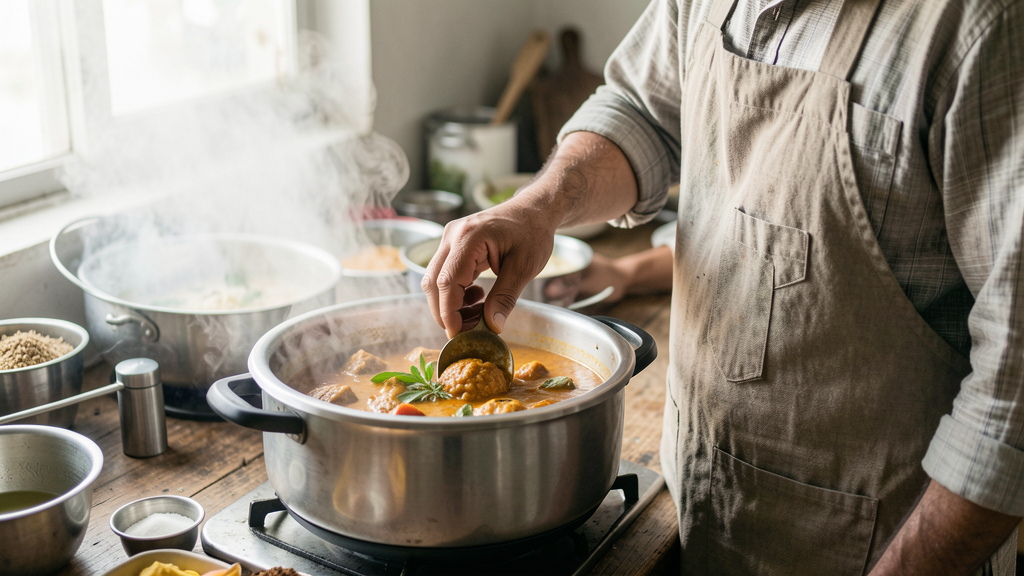
I use boneless chicken thighs cut into 2-inch cubes. With the lid on, they finish in twelve minutes. The texture is superior to pressure-cooked meat because you haven't gelatinized the connective tissue into mush; you have kept the grain intact. The meat retains a bit of chew, which is essential for satisfaction. If you are using pre-boiled eggs, the same applies, though the window for perfection is even tighter. My method for making egg curry in under 20 minutes using pre-boiled eggs relies entirely on this rapid absorption technique rather than long steaming.
Pressure cookers are excellent at infusing flavors, but they are terrible at developing them. The Maillard reaction—browning—cannot happen above boiling point inside a wet environment. When you dump onions, garlic, ginger, and spices into a pressure cooker with water and meat, you are effectively boiling everything. You end up with a homogenous, grey sludge that tastes "okay" but lacks depth.
Cooking in a wok allows you to build flavor in stages. You brown the onions first. You bloom the cumin and coriander in the hot fat. You sear the meat until it sticks to the bottom of the pan just slightly, creating those brown fond bits that deglaze into the sauce. This is the "bhunao" technique, and it is impossible to achieve properly in a pressure cooker.
The pressure cooker is a tool of extraction, while the wok is a tool of creation. When I look at how I fed a family of four chicken curry for R$ 50, it wasn't because of an expensive appliance; it was because high-heat cooking extracts maximum flavor from cheaper ingredients. A simple onion-tomato masala cooked down in an open pan tastes richer and more complex than anything that has been pressure-steamed for twenty minutes. You taste the individual notes of the spices, not just "curry flavor."
Let's talk about the practical reality of urban kitchens in 2026. Countertop real estate is expensive, and so are high-end multicookers. A decent pressure cooker will set you back a significant amount of money, money that could be spent on high-quality spices or better meat.
A wok, or even a heavy-bottomed stainless steel skillet, is a fraction of the cost and does ten times the work. You can boil pasta in it, stir-fry vegetables, deep fry snacks, and simmer curries. It is the ultimate weeknight tool. The maintenance is lower too. A pressure cooker has sealing rings, valves, and electronics that fail. A wok just needs seasoning and heat.
The "weeknight curry" category on this site is defined by the 45-minute rule: from prep to cleanup, you must be done. Washing a pressure cooker insert, the lid, the rubber gasket, and the outer shell takes time. Washing a wok takes thirty seconds and a sponge. When you are tired after work, cleanup effort is a valid ingredient in your decision-making process.
We also need to address the "one-pot" myth associated with these devices. Yes, it is one vessel, but you often have to sauté ingredients in the base anyway, then scrape them down, then add liquid, then lock the lid. It is a disjointed process. The wok offers a continuous flow.
There is also the issue of liquid ratios. In The 'One-Pot' Rice and Curry Ratio Explained, I discussed how difficult it is to get grains and meats to finish at the same time without turning into mush. A pressure cooker exacerbates this; the intense agitation breaks the rice grains. In a wok, you have control. You can add water, see the boil, and adjust the heat instantly.
If you are cooking tough beans, dal that hasn't been soaked, or heavy beef cuts, the pressure cooker wins. I will never deny that. But for the vast majority of weeknight chicken or seafood curries, it is overkill. It removes the chef from the equation. You press a button and hope. Cooking in a wok requires you to look, smell, and taste. It forces you to adjust the seasoning as the sauce reduces. That engagement is what makes food taste good.
Ultimately, the pressure cooker is a crutch for fear. We fear the meat will be tough, so we steam it to death. We fear the spices won't meld, so we trap them under pressure. But good cooking comes from managing heat and time, not from hiding behind a locking mechanism.
If you want to improve your curries this year, put the credit card away and pick up your heavy skillet. Cut your chicken smaller, crank the heat up a bit higher than you are used to, and trust the sear. You will find that the food is not just edible; it is vibrant, textured, and distinctly yours, cooked by hand rather than processed by a machine. The best weeknight curry isn't the one that cooks itself; it's the one you can actually control from start to finish in twenty minutes flat.

Transform pre-boiled eggs and a blitzed onion-tomato base into a rich, protein-heavy curry in just 20 minutes using this high-heat, assembly-only method.
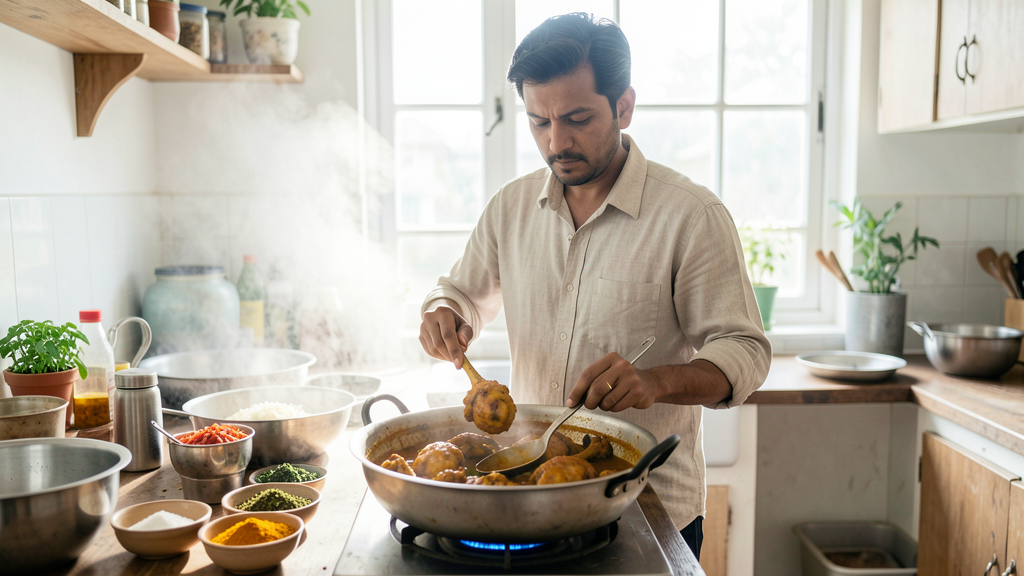
A detailed breakdown of how I fed a family of four a rich chicken curry for R$ 50 by swapping expensive breast meat for bone-in cuts and optimizing pantry staples.