Weeknight Curries
Myth: You Cannot Make Good Curry Without a Pressure Cooker
Ditch the expensive gadgets and learn how high-heat wok techniques can deliver tender, flavorful chicken curries in just twenty minutes.
6 min read
 Practical guides to practical Indian cooking, spices and weekly curries
Stop throwing away perfectly good dinner; here is why coconut milk outperforms yogurt in the brutal environment of the office microwave.

Editorial image illustrating The Reheat Test: Coconut Milk vs. Yogurt for Leftover Curries
It is 8:15 PM on a Tuesday. You have managed to get a decent Chicken Curry on the table in under 40 minutes, adhering strictly to the timeline that keeps weeknight cooking sane rather than stressful. You packed the leftovers into a glass container for tomorrow’s lunch, feeling organized. Fast forward to 12:30 PM the next day. You are standing in the office pantry, waiting for the microwave beep. When you retrieve your lunch, the anticipation dies. That rich, velvety sauce you made last night has transformed into a grainy, oily mess or a coagulated, separated disaster.
We have all been there. The rift between a freshly cooked curry and its reheated counterpart is where many home cooks lose their confidence. In my kitchen, this is not just about taste; it is about economics and food safety. As I detailed in my breakdown of how I fed a family of four chicken curry for R$ 50, wasting leftovers because of poor texture is a luxury none of us can afford.
To solve this, we need to look at the two dominant bases of Indian weeknight cooking: coconut milk and yogurt. They behave fundamentally differently when cooled and violently reheated. One fails because of protein chemistry; the other fails because of fat physics. Here is how to decide which one earns a spot in your tiffin box.
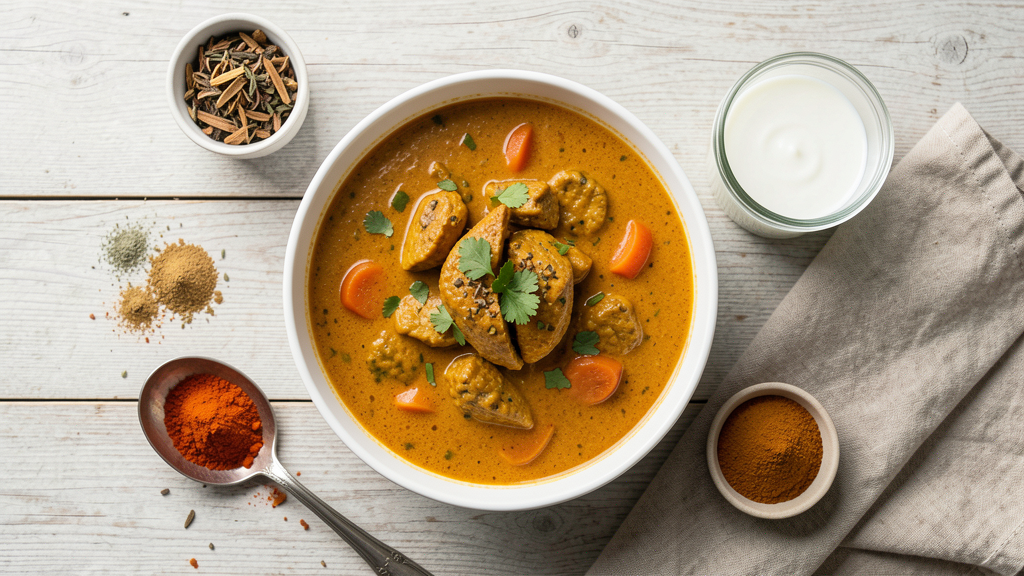
Yogurt is a brilliant addition to a curry. It provides acidity, tang, and a creamy mouthfeel that balances heavy spices. However, yogurt is essentially a suspension of milk proteins (casein) in water. When you heat yogurt during the initial cooking process, you usually temper it—whisking a bit of hot gravy into the bowl of yogurt before introducing it to the main pot. This raises the temperature gradually, preventing the proteins from tightening up into curds.
The trouble starts the next day. Once the curry cools in the fridge, those proteins continue to tighten and expel water. When you put that container in the microwave, you are applying intense, uneven heat. The proteins seize up aggressively. You open the door to find what looks like cottage cheese floating in a thin, spicy broth. The sauce has "broken," and no amount of stirring will bring back that silky emulsification.
I have found that meat-based curries, particularly those with chicken or lamb, suffer more here. The meat juices leach into the yogurt sauce overnight, altering the pH and encouraging the separation. If you are making a chicken curry in under 20 minutes using pre-boiled eggs, a yogurt base can work if the sauce is thickened with a flour slurry or nut paste, but plain yogurt gravies are high-risk for the lunch box.
Coconut milk faces a different physics challenge. It is an emulsion of coconut oil, water, and proteins. Unlike dairy, coconut oil has a very low melting point—around 76°F (24°C). In your refrigerator, which is likely set to 40°F or lower, the fat in the coconut milk solidifies and floats to the top. You open your lunchbox to see a white, hardened disc of fat sitting atop a watery, grayish broth.
Visually, this is alarming. It looks like the curry has spoiled. However, this is actually a much easier problem to solve than the protein coagulation of yogurt. Fat and water separation is reversible with heat.
When you microwave a coconut-based curry, that solid fat melts rapidly. Because the fat was already separate, it doesn't fight against the liquid; it just needs to be stirred back in. You might end up with a curry that is slightly oilier than it was the night before—the emulsion isn't quite as stable post-reheat—but the texture remains generally consistent. It feels creamy in the mouth, not grainy.
There is a caveat here. If you are using "lite" coconut milk, which is often just water with thickeners and a splash of coconut extract, the texture can turn gluey or chalky. For leftovers, you must use full-fat canned coconut milk. The higher fat content protects the texture during the thermal shock.
I ran a strict test this past February, preparing identical spice bases and splitting them into two vessels: one with yogurt, one with coconut milk. After 12 hours in the fridge, both looked distinctly unappetizing, but the microwave results were telling.
The yogurt curry required surgical intervention. I had to add a teaspoon of water, cover it, and heat it in short 30-second bursts, whisking furiously in between. Even then, the texture remained slightly granular. It tasted fine—the flavor had actually developed and deepened—but the mouthfeel was disappointing.
The coconut curry was far more forgiving. I heated it for 90 seconds straight. The fat melted instantly. A quick stir with a spoon reunited the oil and the liquid. The mouthfeel was luxurious, arguably richer than the night before because the water had evaporated slightly, concentrating the flavor.
The decision often comes down to what you are serving the curry with. If you are packing rice, the coconut milk's oil can be a benefit. I often rely on the 'one-pot' rice and curry ratio explained to ensure the rice absorbs that excess fat during the reheat, preventing a greasy puddle at the bottom of the box. If you are eating it with roti, the yogurt curry, despite its texture, might cling better to the bread without making it soggy with oil.
You might be wondering if you can have the tang of yogurt with the stability of coconut. The answer is yes, but with conditions. Adding a tablespoon of coconut milk or cream to a yogurt-based curry can act as a buffer against the protein seizing. Similarly, whisking a teaspoon of cornstarch into your yogurt before tempering it on the first night can stabilize the sauce enough to survive the microwave.
However, for a true weeknight strategy, we want to minimize steps. We do not want to be creating emulsions at 7:30 AM before rushing to catch the train. We want to cook, pack, and forget.
This is where we have to address the "myth of convenience." Many cooks believe that a pressure cooker solves all texture issues because it breaks down fibers so thoroughly. While pressure cooking is excellent for tough cuts of meat, it does not prevent dairy from splitting. As I discuss in my article on the myth that you cannot make good curry without a pressure cooker, the vessel matters less than the ingredients you choose for the long haul.
If your primary concern is the visual and textural integrity of your lunch after a rough reheat, coconut milk is the clear winner.
It tolerates the transition from the fridge cold to the microwave heat with grace. The "splitting" is merely fat separation, which is easily corrected with a stir. The resulting sauce remains smooth and coats the palate. Yogurt, while offering a flavor profile that is often superior and more complex in savory dishes, carries a high risk of textural ruin. Once those proteins have tightened into curds, they do not go back.
My advice for the weeknight warrior in 2026 is simple: Save the yogurt-based Kadhi or Tikka Masala for nights when you eat immediately. If you are batch-cooking on Sunday for the week ahead, or specifically packing a lunch for Tuesday, reach for the can of full-fat coconut milk. It guarantees that your midday meal provides the comfort and sustenance you need, rather than a sad, separated reminder of yesterday's dinner failure.

Ditch the expensive gadgets and learn how high-heat wok techniques can deliver tender, flavorful chicken curries in just twenty minutes.
Transform pre-boiled eggs and a blitzed onion-tomato base into a rich, protein-heavy curry in just 20 minutes using this high-heat, assembly-only method.