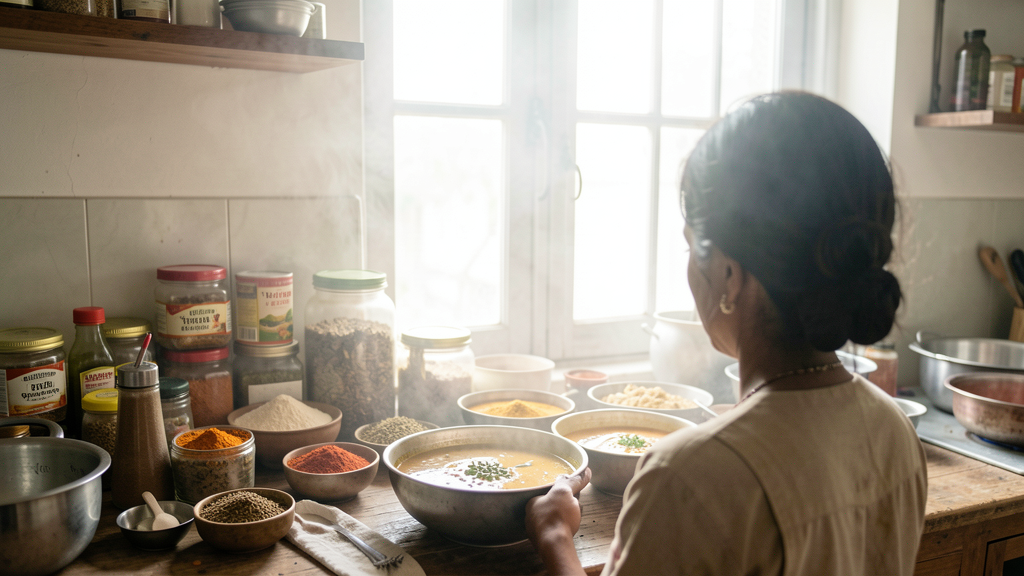
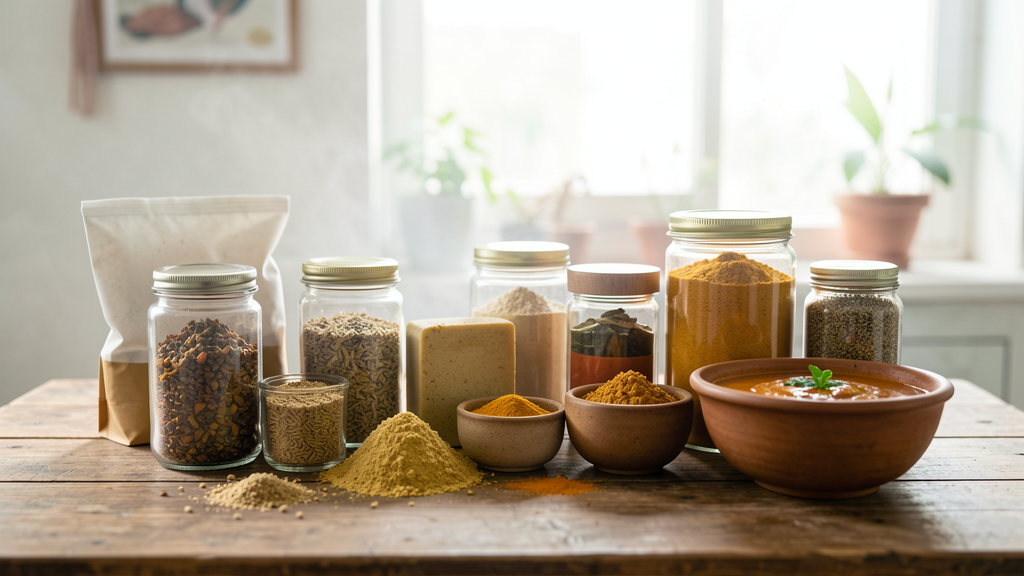
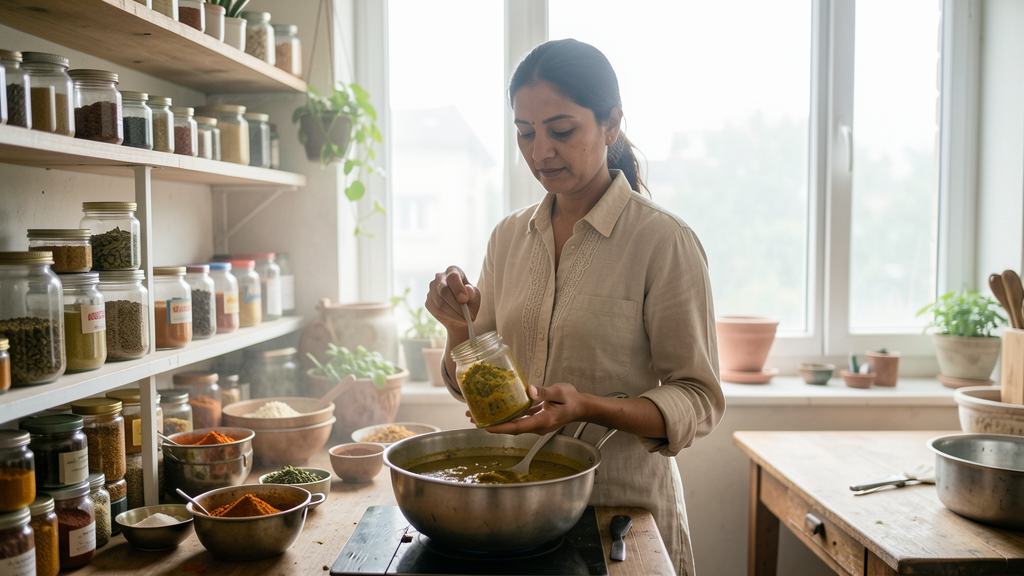
Editorial image illustrating The 3-Step Visual Guide to Blooming Cumin Seeds Without Bitterness
There is a specific, heart-sinking moment familiar to anyone who has attempted an Indian dal from scratch. You drop the cumin seeds into the hot oil, turn your back for ten seconds to chop a tomato, and suddenly the air is filled with a harsh, acrid stench. The nutty, earthy potential of the spice has been carbonized into a bitter mess that will permeate every single spoonful of your dinner. I have been there, even as a professional editor, usually on a Tuesday night when I am rushing. It is the single most common error that renders a home-cooked curry unpalatable.
The difference between a deeply aromatic base and a bitter disaster is often less than five seconds. Most recipes tell you to "fry until aromatic," a vague instruction that leads to more anxiety than success. Aromas are subjective; visual cues are not. We need to stop relying on vague descriptions of scent and start observing the physics of the oil and the seed.
If you have been reaching for store-bought pastes to avoid this risk, you are missing out on the soul of the dish. I often argue that switching to whole spices changed my kitchen economy entirely, not just for the cost, but for the flavor control. Blooming cumin correctly is the gateway to that control. Here is how to execute it perfectly by relying on sight and sound rather than guesswork.
The Setup: Choosing Your Vessel and Heat
The vessel you choose dictates the thermal mass of your tempering. A thin, cheap aluminum pan heats up fast but loses heat instantly the moment ingredients hit the metal, causing the temperature to spike erratically. I prefer a heavy-bottomed stainless steel or a well-seasoned cast iron skillet. In 2026, with induction cookers becoming standard in many apartments, managing heat retention is even more critical. The oil needs to act as a stable thermal bath, not a frying mechanism.
Before you add a single seed, you must assess the oil's readiness. We are looking for medium-high heat, not smoking hot. If your oil is smoking, it has already broken down, and any spice you add will taste burnt immediately. Pour your oil—canola, vegetable, or peanut oil work best for high-heat blooming—and let it sit over the flame for about 90 seconds.
Look for the "shimmer." In a stainless steel pan, you will see fine, rapid ripples moving across the surface of the oil. This indicates the oil has expanded and is hot enough to cook the exterior of the seed rapidly without penetrating to the core too quickly. This visual shimmer is your green light. Do not rush this. Once the oil is shimmering, you have about a 30-second window to execute the sequence without failure.
Step 1: The Entry and the Initial Sizzle
Throw your cumin seeds into the shimmering oil. Do not sprinkle them gently from a height; dump them in quickly so they all hit the heat simultaneously. Uneven cooking leads to some seeds burning while others remain raw.
Immediately, you will hear an aggressive sizzle. This is the water content inside the seed vaporizing and expanding. Visually, the seeds will begin to dart around the pan. They should be moving actively, bouncing off the bottom. If they sit still, the oil is not hot enough, and they will likely soak up the fat and become greasy rather than fragrant.
This first phase lasts roughly 15 to 20 seconds. Your job here is simply to observe the movement. Ensure the seeds are not congregating in a clump; use a wooden spoon to gently separate them if they stick together. You are waiting for the physical changes in the seed to begin. The raw greenish-grey hue will start to fade, shifting towards a deep, rich brown.
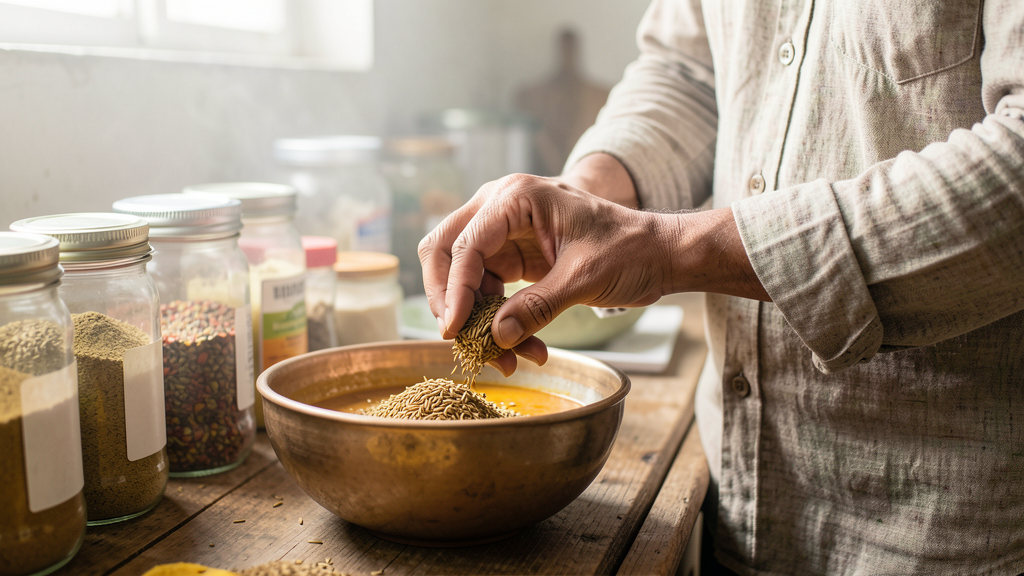
Step 2: Listening for the Frequency Shift
This is the step most people miss because they are watching a phone screen or tasting a sauce. You must listen. The auditory cue of blooming spices is distinct. When the seeds first hit the oil, the sound is a sharp, high-pitched hiss and pop. It sounds urgent and chaotic.
As the seeds toast, that sound changes. The pops become fewer, and the aggressive hiss softens into a steady, lower-frequency sizzle. It sounds less like an explosion and more like a heavy sigh. This shift indicates that the volatile oils inside the cumin have heated to the point of releasing into the fat, but the cellular structure of the seed has not yet combusted.
This sonic shift happens roughly three to five seconds before the spice burns. It is your warning shot. During this phase, you should also see a faint wisp of smoke rising—thin and blue, not thick and white. If you see white smoke, you have missed the window. Stop the heat immediately.
Step 3: The Aroma Release and the Rescue
The moment you hear that lower-frequency sizzle, lean in. The air above the pan should smell intensely nutty, earthy, and slightly sweet. It is a warm, inviting scent. The second you detect that specific aroma, you are at the "Golden Second."
This is the precise moment to stop the cooking process. If you leave the seeds in the hot oil for ten seconds longer, that aroma turns sharp and charcoal-like. The transition is instant.
To rescue the seeds, you must rapidly lower the temperature of the pan. If your recipe calls for onions, garlic, or ginger, throw them in immediately. The moisture in the onions will drop the oil temperature instantly and halt the toasting process. If you are doing a simple tadka to pour over a finished dish, remove the pan from the burner entirely and place it on a cool trivet. Do not just turn the flame off; residual heat in a cast iron pan will continue to cook the seeds.
I often add a pinch of asafoetida powder right at this moment. The residual heat in the oil is perfect to bloom the hing, which only needs a few seconds to lose its raw smell. Adding it now prevents you from having to keep the cumin on the heat any longer.
Why Your Blooming Fails (And How to Fix It)
If you consistently end up with bitter cumin, you are likely confusing "browning" with "burning." Cumin seeds darken quickly. A deep brown color is desirable; a black color is not. The margin is razor-thin.
Another common failure point is overcrowding the pan. If you are making a large batch of curry and try to bloom two tablespoons of seeds in one tablespoon of oil, the temperature will plummet. The seeds will boil in their own moisture rather than fry in the oil. They will become soft and bland, and by the time the water evaporates and the browning starts, the heat distribution will be uneven, leading to random burnt spots. Always use enough oil to float the seeds freely.
Finally, check the age of your spice. Old, dry cumin seeds burn faster than fresh seeds because they lack internal moisture. A seed devoid of moisture chars almost instantly. If you bought your cumin in bulk three years ago and it has been sitting in a clear jar on the windowsill, it is likely past its prime. This is often why your garam masala tastes different every time; inconsistent ingredient quality leads to inconsistent blooming results.
Storing Your Seeds to Preserve Potency
To ensure you have the best possible canvas for tempering, proper storage is non-negotiable. Essential oils are volatile and evaporate quickly when exposed to light, heat, and air. Once those oils are gone, the seed cannot bloom properly; it will only burn.
Keep your cumin seeds in an airtight glass jar, preferably with a metal lid that creates a vacuum seal. Store the jar in a dark, cool cupboard, away from the stove and sunlight. Under these conditions, whole cumin seeds will retain their essential oils and potency for at least six months, often up to a year. Avoid storing them directly above your oven; the ambient heat rising from the burner will slowly cook the oils out of the seeds before you even use them.
Mastering this three-step process changes the trajectory of your cooking. You stop fighting the ingredients and start working with their chemistry. The curry base becomes something you build with confidence rather than something you hope survives the heat. Trust the shimmer, listen for the sigh, and catch the scent. Your palate will notice the difference immediately.