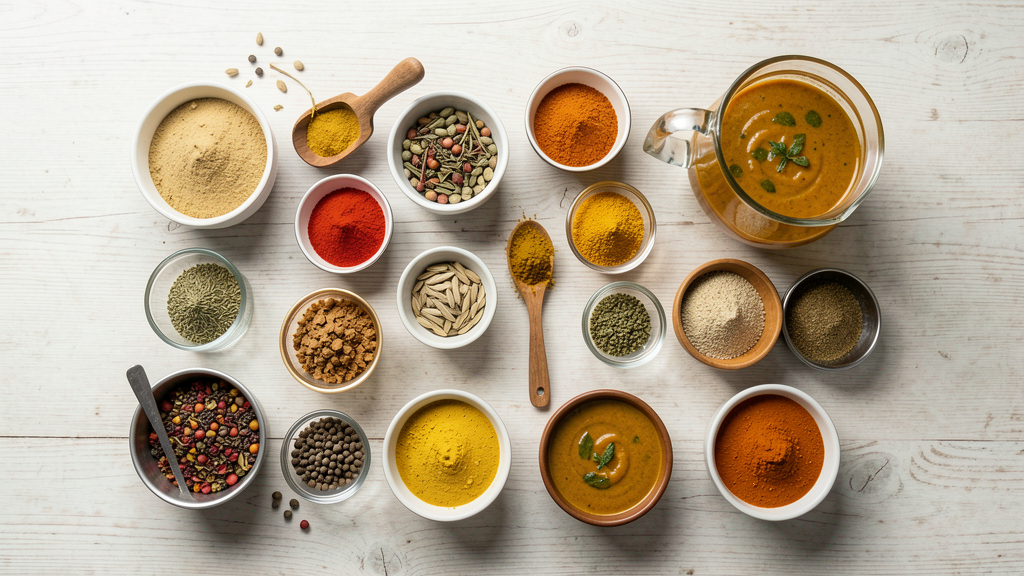
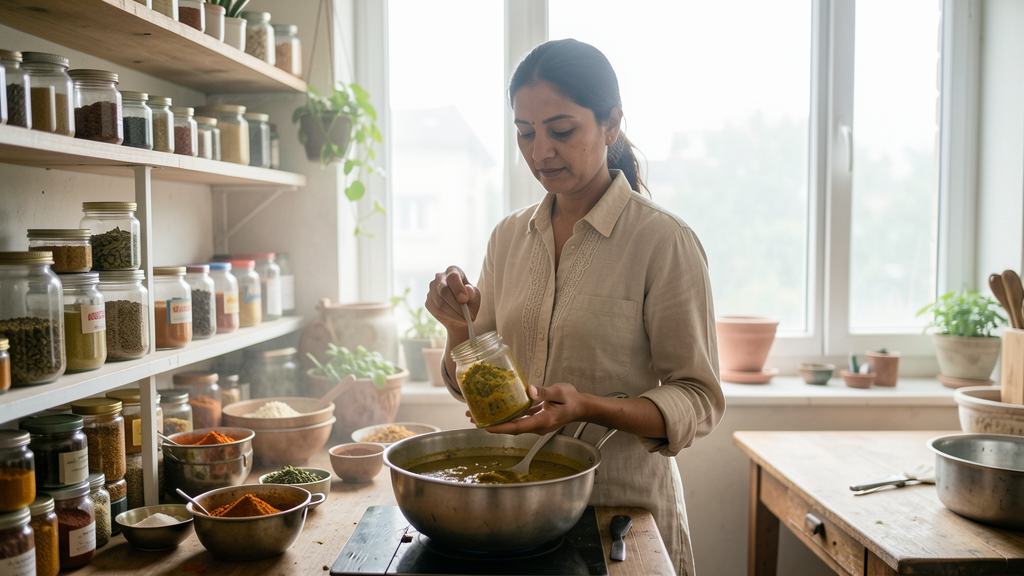
Editorial image illustrating The Day I Switched to Whole Spices and Saved R$ 40 a Month
I used to stand in aisle 4 of my local supermarket, staring at the wall of glass jars filled with vibrant orange, yellow, and brown powders, convincing myself that this was the price of admission for good Indian cooking. It felt professional. It felt easy. But mostly, it felt expensive. On a Tuesday in early February 2026, I stood there with a jar of "premium" ground coriander in my hand. It was 40 grams for R$ 14.90. I did the quick mental math and realized I was paying nearly R$ 400 a kilo for a dust that had likely been sitting on a shelf for eighteen months.
That afternoon, I drove past the bulk spice wholesaler on the outskirts of my neighborhood—a place I usually ignored because it felt too industrial for my home kitchen needs. I decided to walk in with a strict budget and a notebook. I wanted to compare the unit cost of the convenience I had been loyal to for years against the "hassle" of whole spices. The result wasn't just a change in my shopping list; it was a complete overhaul of my pantry economics that saved me R$ 40 a month without a single sacrifice in quality.
The Deceptive Math of Convenience
The sticker shock of whole spices scares people off because you are buying a larger volume upfront. A 200-gram bag of whole cumin seeds might cost R$ 25, whereas that tiny jar of ground cumin costs R$ 12. The knee-jerk reaction is to see the R$ 25 as a "splurge." But the numbers tell a different story.
At the wholesaler on February 3rd, I found the following prices:
- Ground Coriander (Jar): R$ 14.90 for 40g (R$ 372.50/kg)
- Whole Coriander Seeds (Bag): R$ 32.00 for 500g (R$ 64.00/kg)
I was paying nearly six times the price for the convenience of someone else grinding the spice months ago. This doesn't even account for the volume loss. Whole spices take up more space due to air gaps between the seeds. When you grind 500g of whole coriander, it compresses into a much denser powder, yielding nearly the same volume as those expensive jars, but with a potency that is undeniable.
The real hidden cost, however, is waste. Because pre-ground spices lose their volatile oils rapidly, I found myself throwing away half-used jars that smelled like old cardboard after three months. I was paying for the privilege of trashing stale product. By switching to whole spices, I eliminated this waste cycle entirely.
Why the Flavor Shift Matters for Your Wallet
There is a culinary reason this switch saves money that goes beyond arithmetic: intensity. Whole spices are self-contained vaults of essential oils. They keep the flavor locked inside until heat shatters the seed's shell. When you buy pre-ground, those oils have been evaporating since the day of grinding.
In my kitchen, this meant I was using two tablespoons of lackluster ground cumin to get a flavor profile that should only require one teaspoon of freshly toasted and ground seeds. By switching to whole spices, my usage rate dropped by nearly half. I wasn't just paying less per gram; I was using less gram per dish. A simple Dal Tadka suddenly tasted like it came from a restaurant in Mumbai, not a flat imitation from a jar in São Paulo.
When you control the grind, you control the texture and the release of flavor. Coarse crushing gives you bursts of citrusy coriander; fine powder gives you the deep, earthy base for a rich sauce. This specificity means you stop over-spicing to compensate for bland ingredients. You stop buying secondary flavor enhancers to fix a dull curry. 5 Store-Bought Spice Blends That Are Wasting Your Money often rely on salt and sugar to hide the fact that the spices inside are dead. With whole seeds, the flavor does the heavy lifting.
The Three-Minute Myth: Is It Too Much Work?
The most common objection I hear is the time factor. It feels like an extra step in an already busy evening. I timed myself. To toast two teaspoons of cumin and coriander seeds, grind them in my mortar and pestle, and add them to the pan takes exactly three minutes and forty-five seconds.
You do not need expensive equipment. While a dedicated electric spice grinder is nice, a heavy mortar and pestle works just as well for small batches. In fact, for harder spices like cinnamon bark or cardamom pods, sometimes a good heavy knife is your best friend to crack them open before toasting. If you have the right knives in your drawer, you can prep whole spices faster than you can hunt for the dusty jar of turmeric in the back of the cupboard.
The ritual of tempering—the tadka—becomes the sensory start of the cooking process rather than a chore. Hearing the cumin seeds sizzle and pop in hot oil is a signal that dinner has started. It connects you to the food in a way that dumping a spoon of brown powder never will. That connection reduces the temptation to order takeout because you are excited to cook.
The Shelf-Life Reality
To make the economics of whole spices work, you have to store them correctly. If you buy a kilo of cumin and leave it in a clear plastic bag on a sunny counter, you have wasted your money. Heat, light, and air are the enemies of flavor.
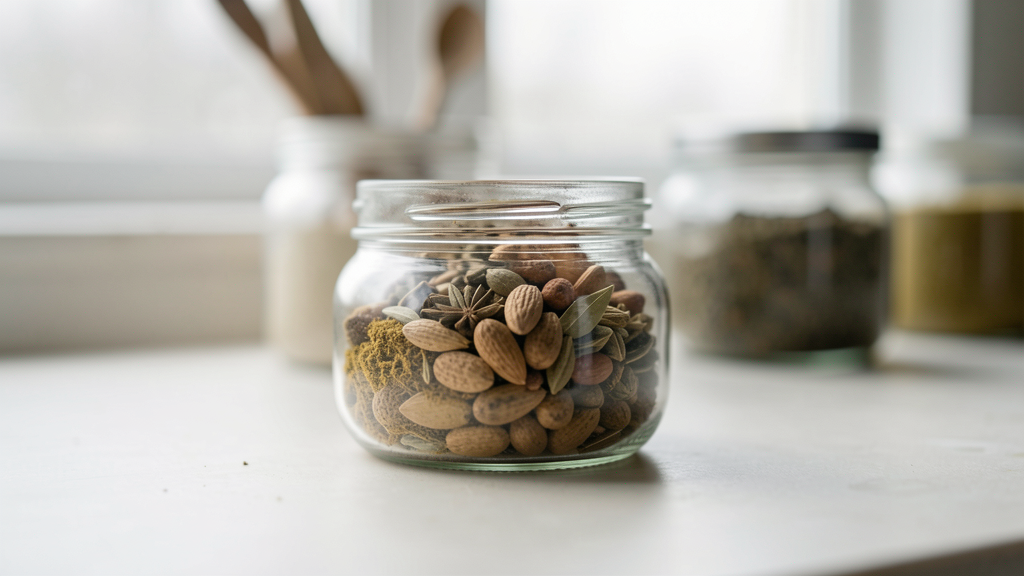
My policy is strict: transfer your bulk purchases into airtight glass jars immediately. Keep them in a cupboard, away from the stove and the window. This simple step preserves the essential oils and potency for at least six months, often a year. Never shake a spice jar directly over a steaming pot. The steam rises, enters the jar, introduces moisture, and turns your expensive cumin into a solid block of mold. Always pour into your hand first.
Proper storage means the "bulk" fear evaporates. You aren't buying more than you can use; you are buying a six-month supply for the price of a two-week supply of the pre-ground stuff. I still have some black peppercorns I bought in January 2026. They are still pungent enough to make you sneeze. If I had bought ground pepper, I would be on my third container by now.
The One Thing I Don't Grind
I am not a fundamentalist. There is one spice I still buy pre-ground, and I recommend you do too: Turmeric. Fresh turmeric root is fantastic, but drying and grinding it yourself to a fine powder is labor-intensive and stains everything it touches a vibrant yellow that refuses to wash out. The cost-benefit analysis for turmeric grinding fails the "easy life" test.
Furthermore, I sometimes prefer the convenience of a block Asafoetida vs. Powder for specific tempering tricks where grinding would disturb the texture of the final dish. But for the heavy lifters—cumin, coriander, cardamom, cinnamon, cloves—the switch to whole is non-negotiable for my budget.
The Final Ledger
I tracked my spending from February 1st to February 28th, 2026, and compared it to my average grocery bills from late 2025.
Old Routine (Pre-ground):
- Weekly spice top-ups (replacing stale jars): ~R$ 35
- Monthly Total: ~R$ 140
New Routine (Whole Spices):
- Initial bulk investment (Cumin, Coriander, Mustard Seeds, Cardamom): R$ 110
- Monthly projected cost (amortized over 4 months): ~R$ 27.50
- Monthly Savings: ~R$ 112.50
Even if I adjust for buying higher quality grades of saffron and vanilla, which are more expensive upfront, I am comfortably saving R$ 40 to R$ 50 a month. That is R$ 600 a year. That pays for my protein budget for two months.
The conclusion here isn't just that whole spices are cheaper. It's that the "convenience" of pre-ground spices is a marketing gimmick that charges you a premium for an inferior product that expires faster. By taking back control of the grinding process, you stop paying for the dust at the bottom of the jar and start paying for the flavor on your plate.
The real victory happened last weekend. I made a chicken curry for friends. One of them asked what brand of garam masala I used because it tasted so complex. I smiled and pointed to the mortar on the counter. It wasn't a brand; it was just cumin, cardamom, and cloves, toasted and ground ten minutes ago. That complexity didn't cost extra. It just cost a little bit of attention. And frankly, my wallet prefers it that way.