Practical Prep
Why Soak Tamarind in Warm Water Instead of Hot?
Unlocking the full sour potential of tamarind requires controlling the water temperature to relax fibers without prematurely cooking the fruit.
7 min read
 Practical guides to practical Indian cooking, spices and weekly curries
Ditch the universal washing rule and learn exactly when to retain starch for creamy, curry-thickening dishes and when to scrub for distinct grains.
Editorial image illustrating The Clear Water Fallacy: Why You Should Stop Washing Your Rice
I watch cooks do it instinctively, a ritual repeated in kitchens from Mumbai to Manchester. They measure the rice, cover it with water, swirl it, drain, and repeat. They check the cloudiness. Still a bit milky? Rinse again. They stand there until the water runs crystal clear, convinced that any opacity equals impurity or, worse, gummy starch. In 2026, with our hyper-sanitized supply chains and improved milling, this obsession with translucence is actually ruining some of your best dishes. We need to talk about the difference between debris and flavor, and why that cloudy water is liquid gold for a Sunday Bisibelabath but a disaster for a Wednesday Pulao.
The dogma is simple: wash until clear. The reality is more nuanced. You are often washing away the very thing that makes a curry cling to the rice, the natural glue that transforms a pot of ingredients into a cohesive meal. The decision to wash shouldn't be based on a visual cue of clear water, but on the textural outcome you desire.
There is a persistent belief that the milky residue left after rinsing rice is dust, talc, or pure dirt. While this was partially true fifty years ago when rice was often polished with talc to increase shelf life, modern rice processing regulations have largely eliminated this practice. That cloudy substance you see is not industrial grime; it is free starch. Specifically, it is amylopectin leaching from the broken edges of the grain.
If you are using aged Basmati, you want to remove this excess starch to ensure each grain stands alone, proud and distinct. But if you are making a dish where the rice and the sauce are meant to be one entity, scrubbing the grain until it is sterile is a tactical error. I see chefs in practical-prep forums arguing that unwashed rice tastes "dusty," but I suspect they are confusing the texture of starchy suspension with actual contamination. The dust myth is causing us to over-process a staple that needs a delicate touch.
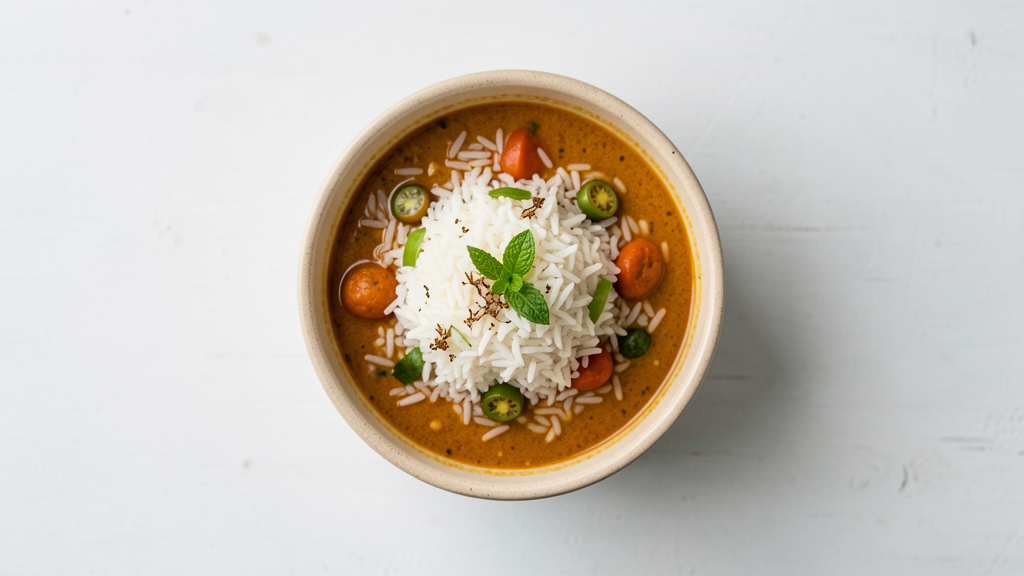
Let’s look at a specific case: Bisibelabath or Sambar Rice. These are not dishes where you want distinct grains; they are comforting, porridge-like affairs where the rice should act as a sponge. When you dump unwashed—or just lightly rinsed—rice into a boiling tamarind and dal broth, the starches gelatinize and burst, thickening the liquid. The resulting consistency is creamy and rich without needing a separate roux or cashew paste.
I recall testing a recipe for a quick One-Pot Veggie Rice in early 2025. I used a premium Sona Masoori, washed it five times until the water was gin-clear, and cooked it. The result was a sad, separated stew where the vegetables sat at the bottom and the rice floated on top. The liquid was thin, lacking body. The curry base had not emulsified with the grain. The next day, I repeated the exact recipe but only rinsed the rice twice, leaving a slight chalkiness to the water. The starch interacted with the turmeric and tamarind, creating a velvety suspension that coated the back of my spoon. The consistency was sensory perfection—thick enough to hold a mound shape when plated, but fluid enough to sip. This is the power of retaining starch.
There is certainly a time for the aggressive wash. If you are making a Hyderabadi Dum Biryani or a simple Lemon Rice, starch is your enemy. In these preparations, the goal is dry, separate grains that flutter apart when you toss them. Here, the "clear water" rule serves a purpose.
For a Biryani, the rice must be par-boiled separately before layering. If you skip the wash, the excess starch on the surface of the grains causes them to fuse together during the steam phase. You end up with a solid block of starch rather than a bed of fluffy spiced rice. However, even here, I see people over-washing. You do not need to rinse for ten minutes. A rigorous agitation with your fingers—literally scrubbing the grains against each other—for three rinses is usually sufficient. The friction knocks off the loose surface powder without damaging the grain structure. If you are using good quality aged Basmati, the internal starch is stable enough that you don't need to strip the grain naked.
The editorial stance here at Massalaapp is specific: we must understand the consistency of the base to know when to stop. When you add rice to a curry, watch how the liquid behaves. If you are aiming for a thick, stew-like consistency and you used washed rice, you will notice the oil separating from the water too quickly. The gravy will look thin and broken. This is a sign you washed away the binder. Conversely, if you are making a Pulao and you used unwashed short-grain rice, the water will turn into a thick, opaque gel before the rice is even fully cooked. The grains will be heavy and claggy.
The sensory cue you are looking for is "nappe." In French cooking, this refers to a sauce coating the spoon. In Indian rice cooking, unwashed rice naturally creates a nappe as it cooks. The water transforms from a watery broth to a thick, emulsified sauce. If you wash that capability away, you have to add tomato puree or ground nuts to fake that texture. Why work harder when the rice will do the job for you? Why Soak Tamarind in Warm Water Instead of Hot? for similar reasons—temperature and technique control extraction, and in the case of rice, washing controls extraction. You are managing the release of starch just as you manage the extraction of tamarind pulp.
Most people wash rice by just running water over it and draining it. That is barely a shower; it’s not a wash. To effectively remove the loose starch without stripping the necessary starch, you need friction.
Place the rice in a bowl, cover with cold water, and plunge your hand in. Rub the grains between your thumb and fingertips vigorously. The water should turn milky immediately. Drain. Repeat. However, stop the second the water runs mostly clear, not absolutely crystal. There should be a very faint haze. That faint haze is your insurance policy against a dry, lifeless pot of rice. It ensures that even in a Pulao, you have a tiny bit of body to the sauce. This technique takes seconds but saves your dinner.
Managing your station efficiency matters here, too. If you are spending five minutes washing rice, you are losing prep time. If you have your spice drawer reorganized, you can grab your jar of cumin while the rice drains, keeping your momentum flowing. Cooking is about economy of motion, and mindless, excessive washing is a waste of it.
Stop treating all rice the same. A bag of short-grain Ponni rice demands to be treated differently from a bag of extra-long Basmati. If you are cooking a wet curry, a Khichdi, or a Porridge, wash the rice once to remove dust and leave the starch alone. Let it do the heavy lifting for your sauce. If you are cooking a dry, separate grain dish, wash it three times, rub it hard, and drain it well.
Cooking is an intervention. Every time you touch an ingredient, you change it. Washing is an intervention. Make sure it is an intentional one that improves the dish, rather than a robotic habit that strips it of its character. Next time you go to the sink, ask yourself: do I want glue or do I want snow? The answer tells you exactly how long to let the water run.

Unlocking the full sour potential of tamarind requires controlling the water temperature to relax fibers without prematurely cooking the fruit.
By shifting my most-used whole spices from a countertop drawer to a magnetic strip directly above my stove, I eliminated the frantic search that ruins curry timing and saved valuable active cooking minutes.