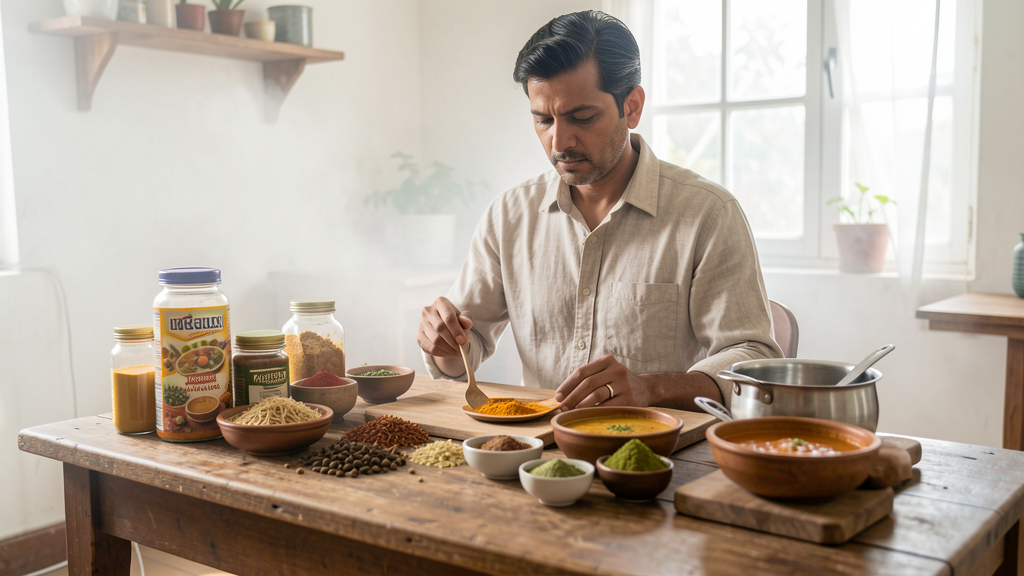
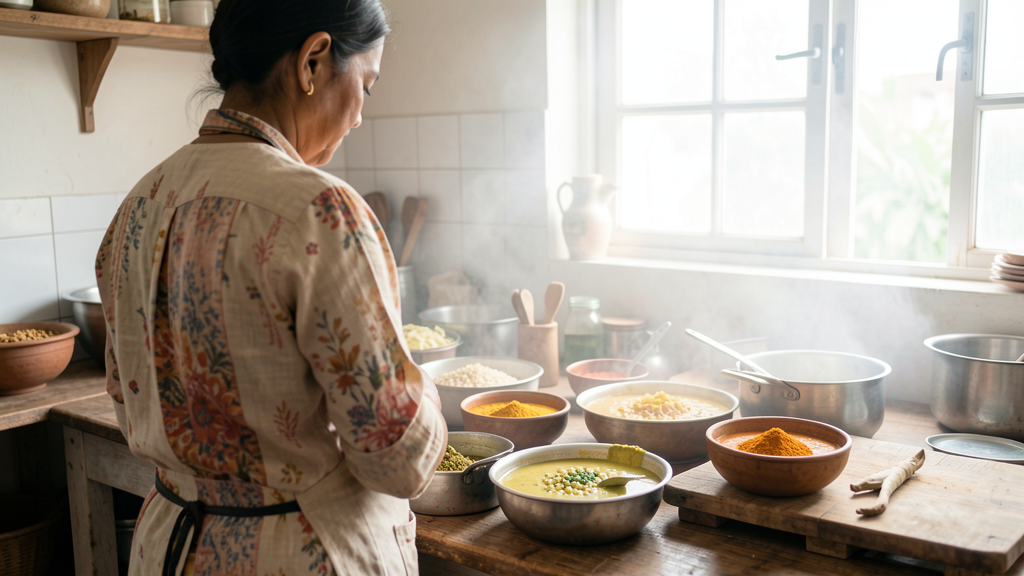
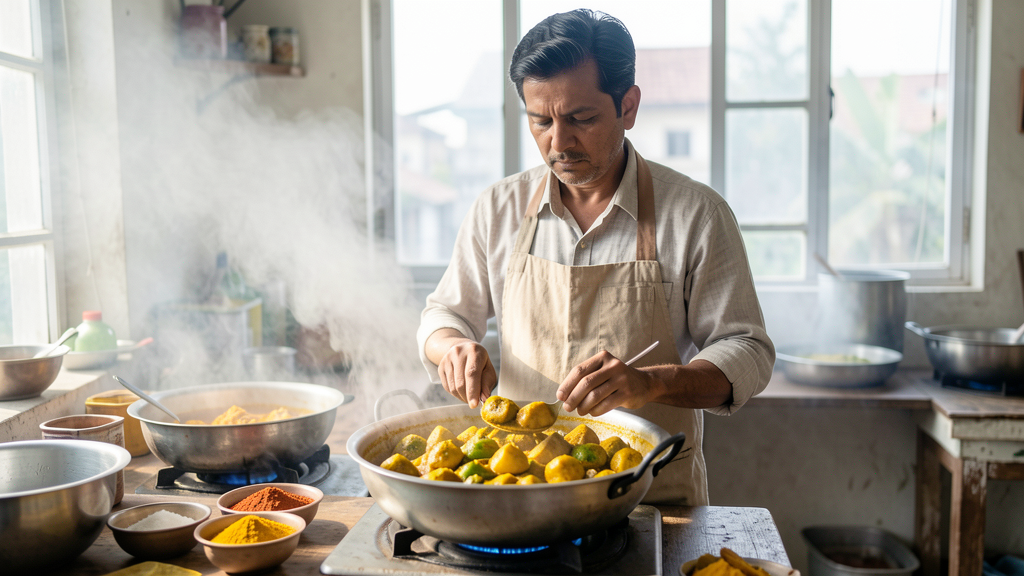
Editorial image illustrating Could Placing Whole Spices Within Arm's Reach of the Stove Really Save Ten Minutes?
The smoke was the first signal, followed immediately by the sharp, acrid sting of burnt cumin hitting my nostrils. It was a Tuesday evening in early 2026, and I was attempting a quick Jeera Rice before the rice cooker even beeped. My oil was shimmering, ready for the seeds, but the jar was in the spice drawer—the one to the left of the sink, two full steps away from my stove. By the time I pivoted back, spatula in hand, the perfect golden hue of the hot oil had turned black. This was not a tragedy of ingredients; it was a failure of kitchen architecture.
For years, I treated my kitchen like a gallery where aesthetics dictated utility. My spices lived in uniform, matching jars tucked inside a deep drawer, hidden from view to maintain a sleek countertop. While this looked impeccable in photos, it created a chaotic workflow during the actual performance of cooking. In Indian cooking, the window between hot oil and burnt spices is measured in seconds, not minutes. The question wasn't whether I was a good cook, but whether my kitchen was set up to let me cook well. I decided to overhaul my system, moving my high-frequency whole spices from the drawer to a magnetic strip and small ceramic trays placed literally within arm’s reach of the flame. The result was not just a cleaner counter, but a tangible reduction in active prep time and, more importantly, a significant improvement in the consistency of my curries.
The Critical Window of the Tadka
The fundamental problem with the "spice drawer" philosophy lies in the physics of the tadka, or tempering. When we heat oil or ghee for tempering, we are waiting for it to reach a specific temperature where it is hot enough to sputter mustard seeds instantly or bloom cumin seeds without turning them bitter. This temperature is usually around 350°F (175°C). If you drop your heat to medium to go hunt for a jar, the oil temperature drops, and the seeds will absorb the fat rather than bloom, resulting in a greasy, raw flavor. If you keep the heat high and walk away, you risk burning, as I did that Tuesday.
The ergonomic issue here is pivot distance. In a standard kitchen layout, the "prep zone" is often separated from the "cooking zone." When a recipe calls for adding whole spices—say, cumin and fenugreek seeds before adding onions—your physical body creates a disconnect. The ten minutes I claim to have saved didn't come from chopping vegetables faster; they came from eliminating the "stop-and-search" friction that disrupts the flow state of cooking.
For instance, when preparing Why Soak Toor Dal? The Texture Difference Explained for a weekday lunch, the pressure cooker timing is unforgiving. You have the ghee melting in a small pan for the final garnish. If the tadka is ready but the dal is not, or vice versa, you have to juggle. Having the turmeric, red chili powder, and whole peppercorns in a dedicated "staging zone" right next to the burner allows you to keep one hand on the pan handle and the other on the spice spoon. You never break your gaze from the pan. This constant visual monitoring prevents the most common mistake home cooks make: adding aromatics to oil that is either too cool or too hot.
Redefining "Arm's Reach" for Indian Cookery
The solution I implemented required a shift in mindset regarding what belongs on the counter. I used to believe that only appliances deserved counter real estate. I cleared a six-inch section of the backsplash—the narrow vertical space between my stove hood and the cooktop—and installed a heavy-duty stainless steel magnetic strip. This was not for knives, but exclusively for my whole spices.
I transferred my daily drivers—cumin seeds (jeera), brown mustard seeds (rai), fenugreek seeds (methi dana), and nigella seeds (kalonji)—into small, flat-bottomed tins with clear lids. These tins stick to the magnet. The effect was immediate. Suddenly, the distance between "need spice" and "have spice" was reduced from a three-second walk-and-turn to a three-inch reach.
This placement is specific to whole spices because of their usage pattern. Powdered spices like turmeric or coriander are usually added after the wet ingredients have calmed the pan down. You have slightly more time with those. But whole spices are the opening act. They go into the fat. The urgency is highest here. By placing them on the vertical backsplash, I also solved the issue of stove splatter dirtying my counter containers. The vertical orientation keeps them cleaner than if they were sitting on the counter next to a spluttering pan.
However, this strategy requires discipline. You cannot simply dump your entire collection onto the strip. I limited it to the five spices I use in 90% of my savory dishes. The rare items—ajwain for parathas or black cardamom for rich biryanis—remain in the drawer. The goal is not to eliminate the drawer, but to create a "hot" and "cold" storage system. The "hot" storage is for immediate deployment; the "cold" storage is for deep inventory.
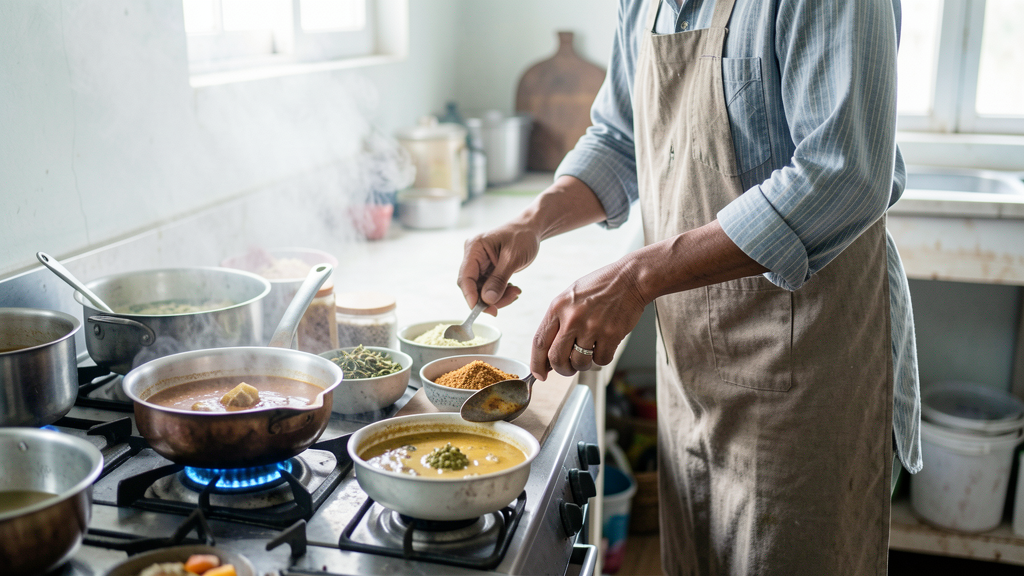
How Fluid Dynamics Change When You Don't Stop
There is a less obvious benefit to this reorganization that speaks directly to the texture of the final dish. When cooking a curry base, the consistency of the onion-tomato masala is the determinant of success. The goal is to cook the moisture out of the onions and tomatoes until the fat begins to separate from the masala, a stage we call "bhunai."
This process relies on continuous evaporation. Every time you turn away from the stove to hunt for a cumin jar, you inevitably break your rhythm. You might leave the lid on for thirty seconds too long, trapping steam. When you return, the onions are sweating rather than frying. By having the spices right there, you maintain the momentum of the evaporation cycle. You can add the spices, stir, and scrape the bottom of the pan without losing heat or momentum.
Consider the process of making a dry potato dish. If you are following a guide on How to Keep Potatoes Firm in Aloo Gobi, you know that the potatoes must be fried on high heat before they steam. If your oil is ready and you are digging through a drawer for kalonji seeds, the potatoes might sit in the hot oil for an extra minute, overcooking the exterior before the interior is done. The ergonomic reach allows you to toss the seeds in precisely when the potatoes hit the pan.
Furthermore, the sensory consistency of the base changes. When you are focused and undistracted, you can smell the exact moment the raw tomato acidity turns into a sweet, concentrated pulp. You can see the paste turn from a bright, watery orange to a deep, matte reddish-brown. If you are distracted by storage logistics, you miss these cues. You might add water too early to prevent sticking, which results in a watery, diluted gravy rather than a thick, emulsified sauce where the oil glistens on top. The "ten minutes saved" is actually just the time I used to spend trying to fix a broken gravy base.
The Trade-offs of Heat and Humidity
I would be remiss if I painted this reorganization as a flawless solution without addressing the trade-offs. Placing spices immediately adjacent to a heat source introduces the risk of degradation. Spices are volatile organic compounds; heat, light, and humidity are their enemies. My stove is the source of all three in a kitchen.
To mitigate this, I do not keep the bulk stock on the magnetic strip. The tins on the wall are refilled every Sunday from airtight glass jars stored in a cool, dark pantry. The turnover rate for these "stove spices" is high, usually within three to four days, so they don't have time to go stale or lose their potency from the ambient heat of the kitchen.
There is also the visual clutter. A line of metal tins above the stove interrupts the clean line of a subway tile backsplash. It looks "industrial" rather than "domestic." For a while, this bothered my aesthetic sensibilities. But I grew to realize that a kitchen that functions efficiently possesses its own kind of beauty. The ease of grabbing the mustard seeds without looking creates a fluidity in movement that is satisfying to watch and perform.
Another caveat is cleaning. The area above the stove catches grease splatter. The tins need to be wiped down frequently, or they develop a sticky film. This is a small maintenance task, but it is necessary. If you neglect it, the outside of the tins become gummy, which feels unpleasant when you are trying to cook quickly.
Rethinking the Geography of the Stove
Ultimately, the decision to move my spices was an admission that the standard "triangle" layout of kitchen design (sink, fridge, stove) doesn't account for the micro-movements of specific cuisines. Italian cooking might benefit from herbs near the stove, but Indian cooking relies heavily on the sequence of whole spice blooming.
The time saved is not just about the clock; it is about the cognitive load. When I cook now, my brain is not occupied with the spatial memory of "where is the jar?" It is occupied with the sensory inputs of "how does the sauce smell?" and "is the color right?" This allows for a much deeper engagement with the food.
By creating a dedicated "launchpad" for my spices, I transformed the chaotic few minutes of starting a dish into a seamless transition. The spices are an extension of my hand now, rather than a separate item to be retrieved. If you find yourself constantly burning your jeera or frantically blowing smoke off your mustard seeds, look at your feet. Are you taking steps to get to your ingredients? If so, move them closer. The ten minutes you save will be the best ten minutes of your cooking week.