Practical Prep
5 Knives You Actually Need for Indian Cooking
Stop wrestling with large Western chef's knives for delicate subzi prep; here are the five specific blade shapes that make chopping curry ingredients safe, fast, and precise.
8 min read
 Practical guides to practical Indian cooking, spices and weekly curries
Unlocking the full sour potential of tamarind requires controlling the water temperature to relax fibers without prematurely cooking the fruit.
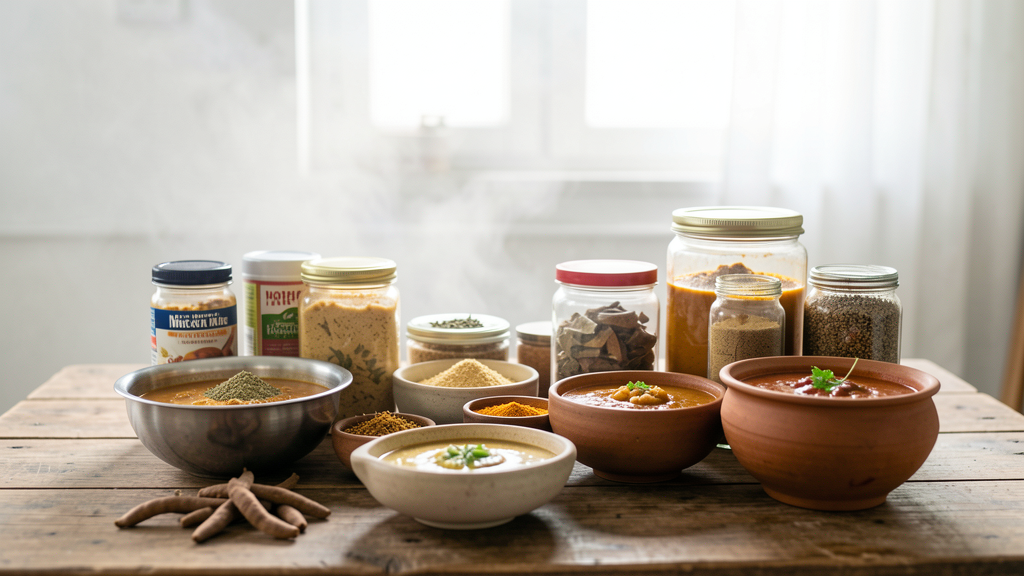
Editorial image illustrating Why Soak Tamarind in Warm Water Instead of Hot?
Every Indian home cook knows the frustration of reaching into a jar of tamarind paste and finding a dull, dark sludge that lacks the vibrant, tangy punch a serious curry demands. While store-bought pastes offer convenience, they cannot replicate the complex acidity of fresh extracted pulp. This is why many of us return to the dried blocks. Yet, even with the best intentions, the extraction process often yields mediocre results. You might end up with a watery separation, seeds that refuse to let go of their flesh, or a flavor that feels muted and cooked rather than sharp and fresh.
The culprit is almost always the temperature of the water used for soaking.
I have watched countless cooks, eager to save time, pour boiling water over a dense lump of tamarind, expecting it to dissolve instantly. While this speeds up the softening, it fundamentally alters the chemical structure of the fruit. To understand why warm water is superior, we have to look at what we are actually doing: we are not dissolving the tamarind like sugar; we are hydrating and relaxing a fibrous network to release the soluble pulp.
A block of tamarind is not a uniform substance. It is a chaotic matrix of seeds, tough fibers, sticky pulp, and skin. When this block dries, the fibers contract and harden, effectively locking the precious sour pulp inside. To extract it, we need to swell these fibers so they release their grip on the soluble solids.
If you drop this block into boiling water, you shock the exterior fibers. They gelatinize too quickly. Think of blanching a vegetable—if you shock it aggressively, the outside cooks while the inside remains raw. In the case of tamarind, the hot water immediately begins to cook the pectins and hemicellulose in the outer layers of the pulp. This creates a slimy, gelatinous barrier that actually prevents the water from penetrating deeper into the block. You end up with a soft exterior and a hard, unyielding core that holds onto the sourness you are trying to harvest. Furthermore, boiling water begins to break down the volatile acids (tartaric acid) immediately, leading to a flatter, less complex flavor profile before the pulp even hits your curry.
To prepare the block correctly, you often need to break it down. If you are working with a very compressed slab, sometimes you need a sturdy blade to chip it apart. It reminds me of the importance of having the right tools for the job; if you are struggling to break down your ingredients, you might want to check if you have the 5 Knives You Actually Need for Indian Cooking to make prep work less of a battle. Once you have manageable chunks, the water temperature becomes the critical variable.
Warm water, generally defined as between 40°C and 50°C (104°F to 122°F), provides the ideal environment for gentle hydration. At this temperature range, the water molecules are energetic enough to penetrate the fibrous web of the tamarind, but not so aggressive as to cook the pectins.
When you submerge the tamarind in warm water, the cellulose and hemicellulose fibers undergo a process known as glass transition. They move from a hard, glassy state to a softer, rubbery state. This allows the water to seep into the microscopic gaps between the fibers, swelling the pulp and separating it from the seeds and coarse threads. It is a hydration process, not a cooking process.
This gradual relaxation preserves the sharpness of the tartaric acid. Unlike vinegar, which can be harsh, tamarind has a rounded sweetness and acidity that can be easily damaged by heat shock. By using warm water, you ensure that the acids remain stable and volatile. When you finally squeeze the soaked pulp, you are getting the full spectrum of flavor—the sourness, the slight caramel notes, and the fruity aroma—rather than a cooked-down jammy residue.
I recommend soaking for at least 20 to 30 minutes. If I am prepping for a Sunday lunch, I might even soak it for an hour, just to be sure. The goal is for the water to cool down to room temperature naturally, allowing the fibers to relax fully.
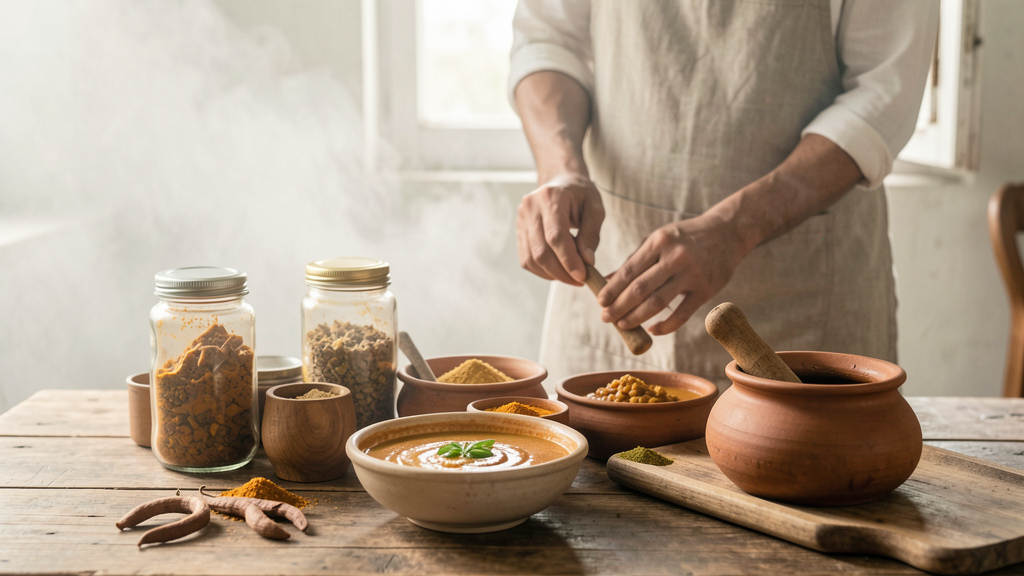
Getting the temperature right is only half the battle. The physical extraction requires a specific technique to ensure you aren't leaving valuable flavor behind. Once the tamarind has soaked and the water has cooled, the block should look bloated and soft.
Do not simply lift the block out. The heavy pulp has sunk to the bottom of the bowl. You must get your hands in there. Working the pulp between your thumb and forefinger is the only way to effectively separate the fibers from the usable paste. The seeds should slip away easily; if they feel sticky and resistant, the water was likely too cool, or you didn't soak it long enough.
As you massage the pulp, you will notice the water turning thick, dark, and opaque. This is the visual cue that you have successfully emulsified the fruit solids into the liquid. If the water looks thin and gray, you likely used boiling water which caused a separation of the solids and the liquids prematurely.
Once you have separated the seeds and fibers, pass the mixture through a sieve. Do not press the fibrous residue through the sieve with force; this forces woody, bitter particles into your sauce. Instead, use the back of a spoon to gently coax the thick liquid through. What remains in the sieve should be dry, stringy fibers.
While tamarind prep is hands-on, it fits well into an efficient workflow. If you Reorganizing My Spice Drawer Cut My Dinner Prep by 10 Minutes, adding tamarind extraction to your routine won't feel like a chore. It becomes just another step in the mise en place, ensuring your acids are ready when the curry needs them.
The choice of warm water over hot water has a ripple effect that extends far beyond the mixing bowl. It fundamentally changes how the tamarind behaves in the pan. This is where my strict rule on curry base consistency comes into play.
If you pre-cook your tamarind with boiling water, you have already broken down its structure. When you add this "pre-cooked" pulp to a hot curry base, often containing yogurt or cream, the proteins in the dairy and the cooked pectins in the tamarind can clash. This often leads to splitting, where the oil separates from the water and floats unappetizingly on top. The sauce looks curdled and broken.
However, when you extract with warm water, the pectins are still intact and stable. They have been hydrated but not denatured. When you introduce this raw, extracted pulp into your simmering masala, it cooks inside the sauce. This allows the tamarind to integrate seamlessly with the fats and spices. The sourness disperses evenly, thickening the sauce naturally without causing it to break.
You should be able to see the change in the sauce immediately. The raw, earthy aroma of the ginger and garlic will mellow, and the oil will emulsify back into the gravy, leaving a glossy, homogeneous surface. This is the sign of a perfectly balanced curry. Much like the Myth: You Must Wash Rice Until Water Runs Clear where obsessive washing destroys nutrients, over-processing your tamarind with heat destroys its structural integrity.
I will be honest: using warm water takes longer than boiling it. It requires patience. You cannot rush the hydration process. But the trade-off is significant. You get a higher yield of pulp from the same amount of dried tamarind, a cleaner flavor profile, and a sauce that holds together beautifully.
There is one caveat, however. If you are in a bind and absolutely must use hot water, use it off the boil. Let the kettle sit for five minutes before pouring. Never use actively boiling water. And compensate by cutting the tamarind into much smaller pieces to increase the surface area, so the heat penetrates evenly without shocking the exterior. But for the best results, stick to the warm soak. It respects the ingredient and rewards you with the bright, sharp acidity that defines authentic Indian cooking.
The result isn't just sourness; it is depth. By preserving the integrity of the fruit through gentle hydration, you ensure that the final dish has a lingering, complex finish that boiling simply cannot achieve. Your curries will taste lighter, fresher, and more vibrant, proving that temperature control is just as important for acids as it is for proteins.

Stop wrestling with large Western chef's knives for delicate subzi prep; here are the five specific blade shapes that make chopping curry ingredients safe, fast, and precise.

Ditch the universal washing rule and learn exactly when to retain starch for creamy, curry-thickening dishes and when to scrub for distinct grains.