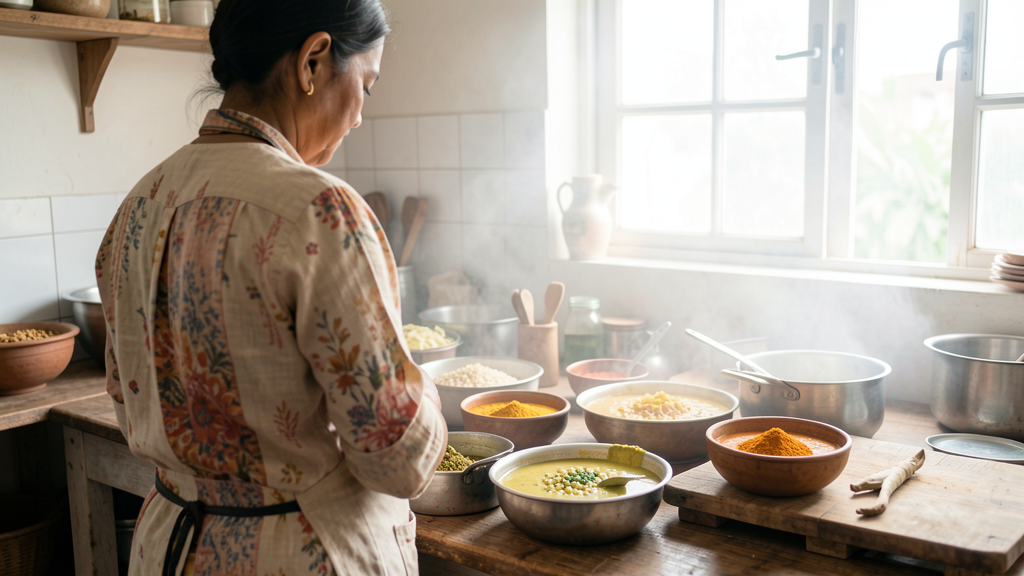
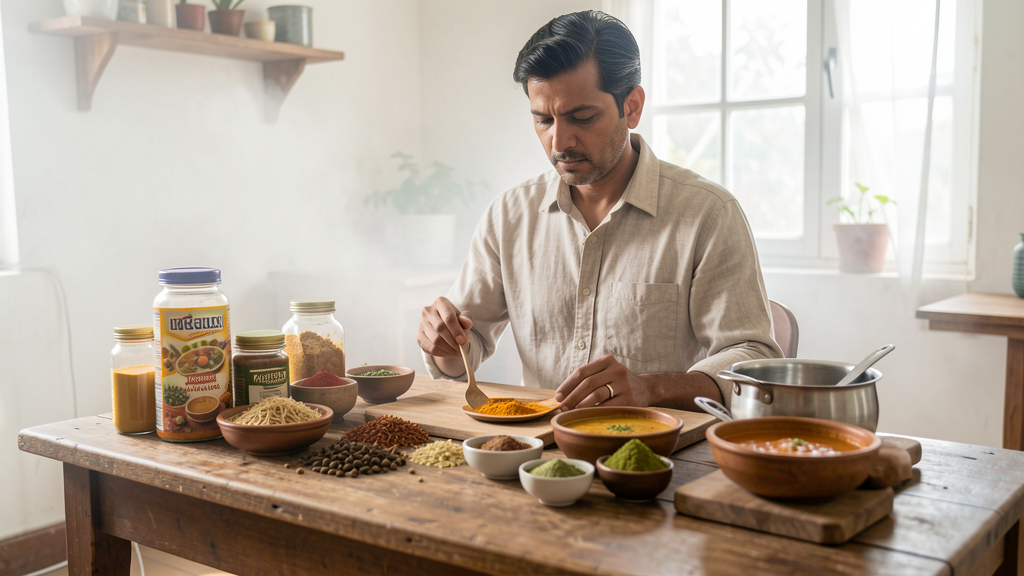
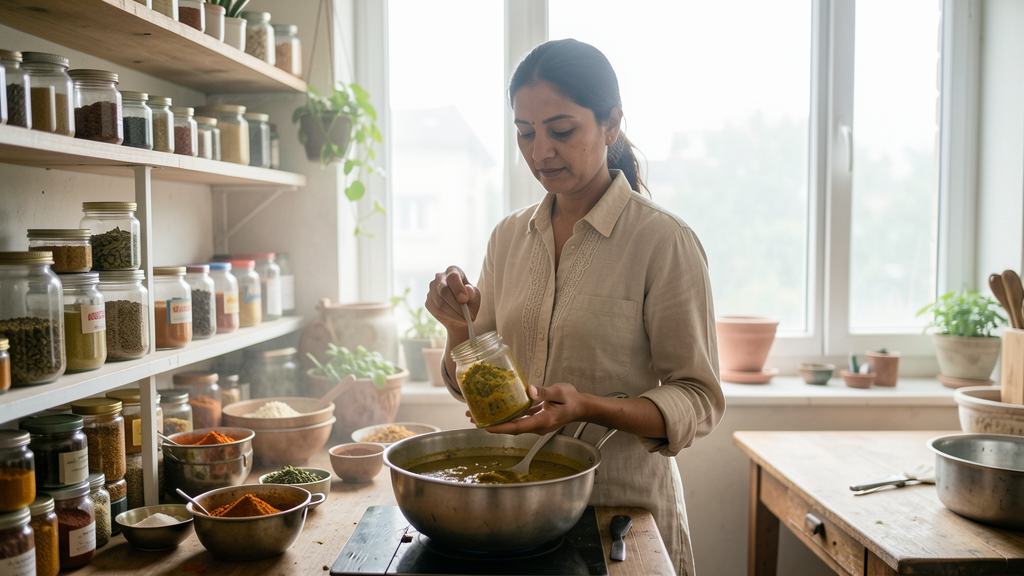
There is a specific frustration that comes with cooking a pot of unsoaked toor dal on a weeknight. You simmer it for forty minutes, add water, simmer again, and yet, when you take a bite, the texture remains stubbornly gritty. The grains have softened, certainly, but they refuse to collapse into that unified, velvety emulsion that defines a perfect home-cooked curry. The culprit here isn't your heat control or the quality of the lentils; it is chemistry. Specifically, it is the battle against phytic acid and the mechanics of hydration.
Many home cooks treat soaking as an optional step, a suggestion for when they have extra time. In reality, soaking toor dal is the decisive factor between a dish that tastes like separate ingredients and one that tastes like a cohesive whole. Understanding this process transforms your approach to dal-legumes entirely.
The Hidden Barrier Within the Husk
Toor dal, or split pigeon peas, contains phytic acid, a compound found in the outer layers of seeds and grains. Its biological purpose is to store phosphorus for the seed to germinate, but in the kitchen, it acts as an anti-nutrient. Phytic acid binds to minerals like iron, zinc, and calcium, inhibiting their absorption in our bodies. More relevant to the texture of your dinner, it acts as a physical barrier that significantly slows down water penetration.
When you throw dry dal directly into boiling water, the heat fights to breach this barrier. The exterior softens and gelatinizes while the interior remains dry and hard. This uneven expansion creates that "sandy" mouthfeel where the tongue detects separate, discrete particles rather than a smooth creaminess. By soaking the dal for at least thirty to forty minutes in cold water before you even turn on the stove, you initiate enzymatic activity that begins to break down the phytic acid. This allows the water to permeate the starch granules uniformly. I have found that even a brief soak significantly reduces the cooking time, but a long soak—up to two hours—changes the structural integrity of the lentil entirely, allowing it to yield effortlessly to pressure.
How Soaking Triggers Starch Gelatinization
The goal of cooking dal is not just to make it edible, but to trigger starch gelatinization. This is the process where starch granules absorb water, swell, and burst, releasing amylose and amylopectin into the liquid. This thickened, starchy liquid is what wraps around the spices and creates the luxurious body of the dish.
If the lentils are not sufficiently hydrated before the heat is applied, the outer hulls rupture before the internal starches have fully absorbed moisture. The starch leaks out prematurely, leaving the water thick but the inner core of the lentil grainy and undercooked. Conversely, a pre-soaked lentil is fully saturated. When heat is applied, the entire grain swells and bursts almost in unison. This results in a "melt-in-your-mouth" consistency where the boundary between the pulse and the broth disappears.
I often compare this to the technique used in How to Keep Potatoes Firm in Aloo Gobi. In that dish, we manage starch to prevent collapse; here, we want to manage it to encourage total disintegration. The soaked toor dal becomes a thickener for its own sauce, eliminating the need for artificial thickeners or excessive reduction time.
The Trade-Off Between Time and Temperature
There is a practical trade-off to consider. We often rely on pressure cookers to brute-force our way through under-soaked lentils. A modern pressure cooker can indeed turn unsoaked dal into mush if left alone long enough. However, the texture achieved through high-pressure coercion is different from that achieved through patient hydration.
Pressure-cooked, unsoaked dal often results in a "mashed potato" consistency where the skins separate from the body of the lentil, creating a frothy, uneven layer on top. Soaked dal, cooked with a moderate amount of pressure, retains its golden hue and offers a silkier mouthfeel. The fats from the tempering—the cumin, mustard seeds, and garlic—emulsify better into a starchy base that has been allowed to hydrate naturally. If your tempering floats on a pool of liquid rather than incorporating into the dal, it is usually a sign that the base was not cooked properly to begin with.
Efficiency in the kitchen is about more than just speed; it is about chemical preparedness. Much like Reorganizing My Spice Drawer Cut My Dinner Prep by 10 Minutes, soaking dal is a mise-en-place step that pays dividends in the final execution of the recipe. It moves the workload to a passive timeframe, leaving you active control over the aromatics and the final seasoning.
Achieving the Perfect Consistency
To get the best results, cover your toor dal with cold water by at least two inches and let it sit. You will notice the water becoming slightly cloudy; this is the phytic acid and surface dust leaching out. Drain this water and rinse the dal before adding fresh water for cooking. This rinse is crucial. If you cook the dal in the soaking water, you are boiling away the impurities you just worked to extract, which can lead to digestive discomfort and a slightly off, metallic taste in the final curry.
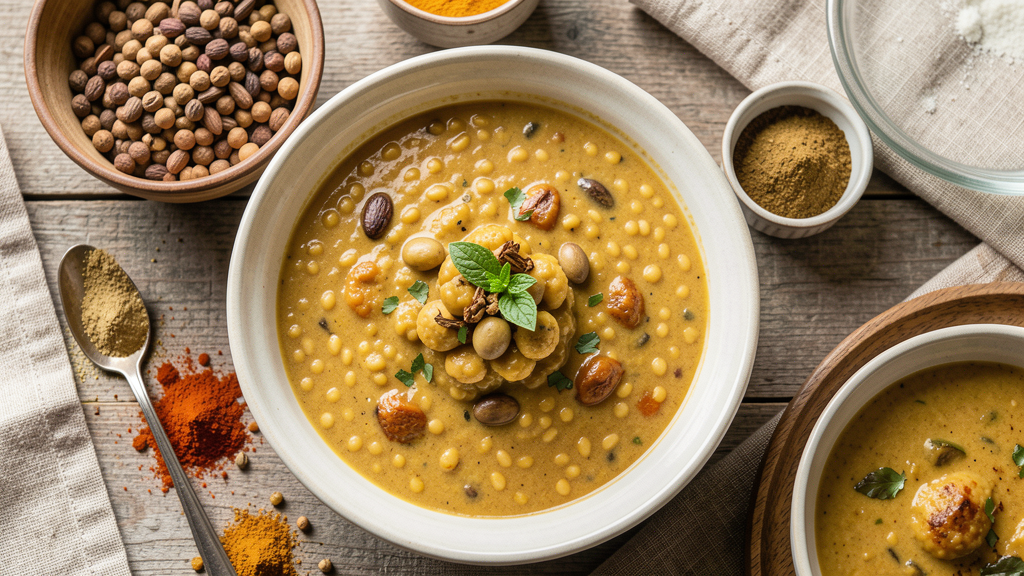
For the stovetop, soaked dal typically takes 20 to 30 minutes to become tender. In a pressure cooker, it may only need two to three whistles. The sensory cue you are looking for is the "whispering" sound of the bubbles. When the dal is fully cooked, the bubbles no't pop aggressively; they hiss and collapse gently, and the surface looks glossy and cohesive. If you stir it and see separate grains rolling around in water, it is not done. It needs to look like a thick, yellow lava that folds over itself.
The Canvas for Flavor
Ultimately, the texture of your dal determines how you perceive the spices. A grainy, watery curry hits the tongue in distinct phases: first water, then spice, then grit. A creamy, well-hydrated dal delivers the flavor profile simultaneously. The starch binds with the turmeric, the chili, and the garam masala, ensuring that every spoonful is identical to the last.
The next time you are about to rush the process, remember that the twenty minutes spent soaking are not wasted time. They are an essential ingredient, as vital as the salt or the oil. They are the difference between feeding your family a bowl of boiled legumes and serving them a comfort dish that feels like a warm embrace. The science of soaking is simple, but its impact on the soul of the dish is profound.