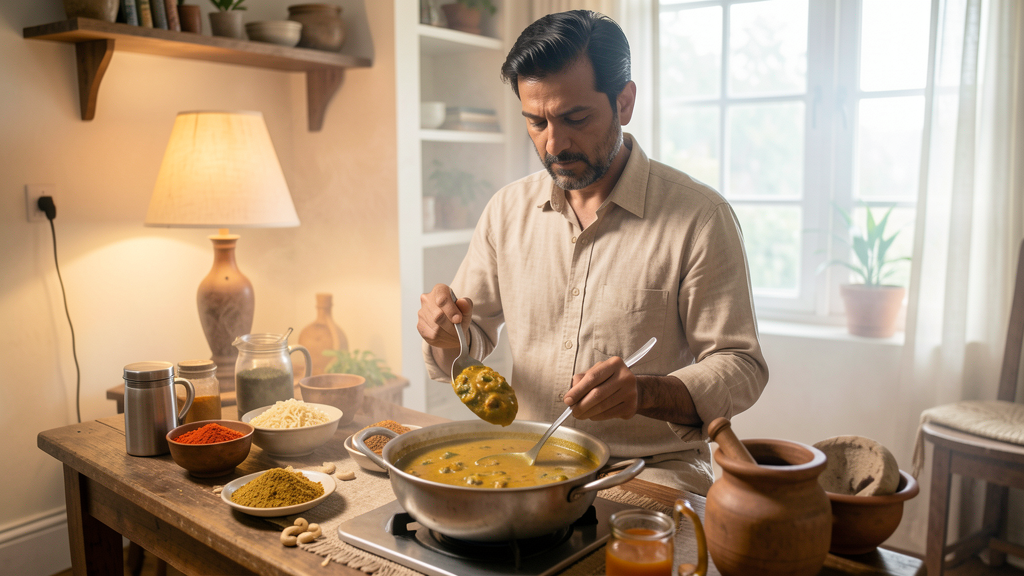
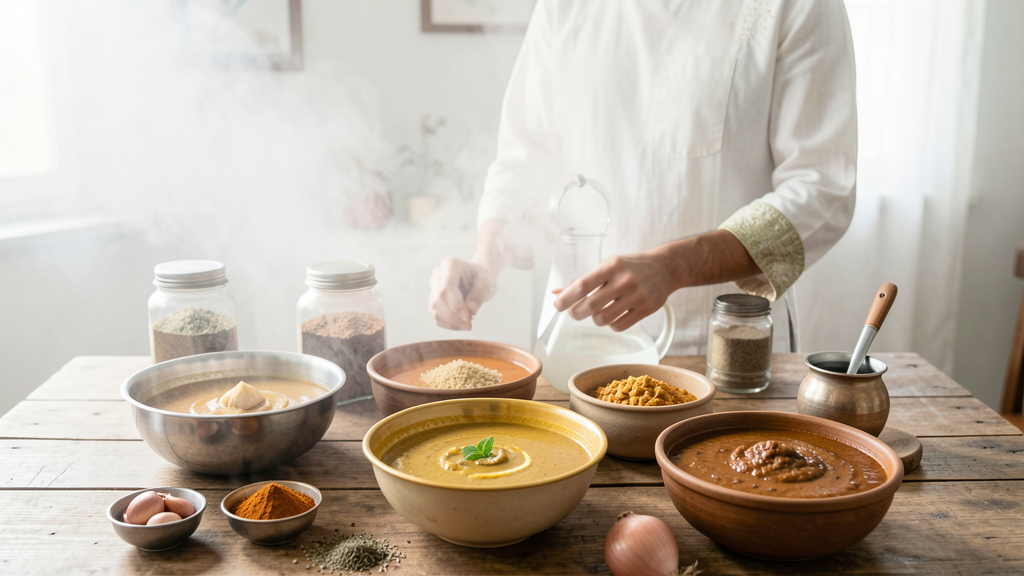
If you have ever browsed a recipe for a Mughlai-style curry or a Shahi Korma, you have likely encountered the instruction to "soak cashews and grind to a paste." It is presented as a non-negotiable step for achieving that luxurious, velvety texture we associate with high-end restaurant food. In 2026, with the price of quality nuts climbing steadily, this advice feels increasingly tone-deaf for the home cook. There is a persistent belief that without a handful of cashews, your gravy will be thin, watery, and fundamentally lacking in sophistication.
This is simply not true. For years, I have watched cooks stress over blenders and soaking times, convinced that their butter chicken will fail without that nutty emulsion. The reality is that reliance on cashews is often a crutch to mask underdeveloped base flavors. The true secret to a rich, thick gravy lies not in expensive nuts, but in the patience applied to onions and the science of dairy stabilization.
Myth: Cashews Are the Only Source of "Restaurant Silkiness"
We need to address the texture issue first. The myth implies that the mouthfeel of a premium curry comes solely from the fats and starches released by ground nuts. While cashews certainly provide a heavy, creamy consistency, they are not the exclusive route to silkiness. In fact, many home cooks overuse cashew paste, resulting in a gravy that is overly heavy, cloyingly sweet, and frankly, dull in flavor complexity.
The texture we crave—the kind that coats the back of a spoon—is actually the result of emulsification and reduction. When you rely on cashews, you are adding thickness through viscosity, but you are missing the textural complexity that comes from a properly cooked base. If you use a high ratio of cashews, the gravy often becomes a one-note sensation of richness, lacking the bright, acidic cuts that define a balanced dish.
Real luxury is about the interplay of elements, not just thickness.
Reality: The Caramelized Onion is the Original Thickener
If you want a gravy that clings to your rice or naan without the high cost of nuts, you must master the onion. The process of caramelizing onions breaks down their cellular structure, releasing natural sugars and pectin. As the onions turn from translucent to golden, and finally to a deep, sticky brown, they transform into a natural thickening agent that possesses a depth of flavor cashews can only dream of.
I am not talking about a quick sauté. I am referring to the patience required to cook down a massive volume of onions until they practically melt into the oil. This reduction concentrates the solids, creating a body that is substantial yet refined.
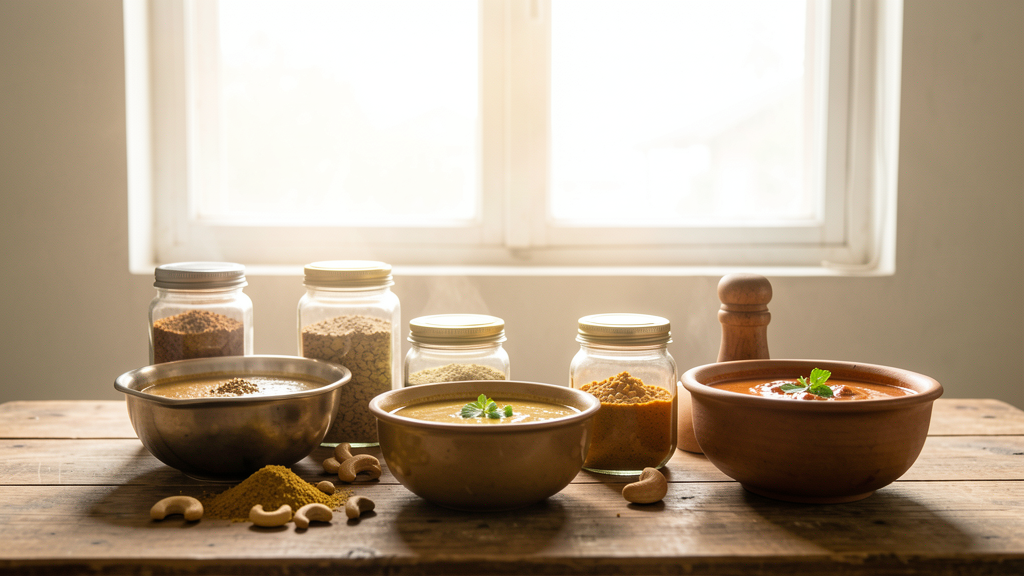
Understanding the nuances of this process is critical. You cannot rush it, and you cannot skip the browning. The Science of Browning Onions: Golden vs. Dark Brown Paste explains exactly why the Maillard reaction is your best friend here. A dark brown paste acts as a flavor bomb and a thickening agent simultaneously. When you add your water or stock later, these concentrated solids rehydrate, swelling the gravy and giving it that coveted, velvety mouthfeel. It costs pennies compared to nuts and offers a savory complexity that makes the dish taste professional.
To make this feasible on a busy weeknight, I rely on batch cooking. The Sunday I make 2 liters of onion masala and save my week is the day I guarantee rich curries without the weekday fuss. Having that ready-to-use paste in the fridge means the thickening work is already done; you are simply reheating and flavoring.
Myth: Yogurt Will Always Split and Ruin the Gravy
This is the fear that keeps people reaching for coconut milk or cashew cream. The logic goes that adding sour dairy to a hot, spiced tomato base will cause it to curdle, resulting in a grainy, unappetizing mess. I have seen countless cooks panic at the sight of tiny white specks forming in their sauce, assuming the dish is ruined.
It is true that yogurt is temperamental. The proteins in dairy tighten when heated, and the acidity in tomatoes can exacerbate this separation. However, curdling is not a terminal illness for your curry. In many traditional preparations, a slight graininess is actually acceptable, but if you want a perfectly smooth finish, you have to stop fighting the yogurt and start managing the temperature.
Reality: Technique, Not Ingredients, Prevents Curdling
You can absolutely achieve a thick, creamy gravy using yogurt, but you must treat it with respect. The primary mistake people make is adding cold yogurt straight from the fridge into a boiling pot of masala. That thermal shock guarantees separation.
The fix is simple: temper your yogurt. Whisk it thoroughly in a separate bowl until it is smooth, then take a ladleful of the hot gravy and slowly whisk it into the yogurt. This raises the temperature of the dairy gradually. Once the yogurt is warm, you can stir it back into the main pot. Furthermore, keep the heat on low once the dairy is added. Do not let it come to a rolling boil; a gentle simmer is sufficient to cook the flavors together.
I also add a tiny pinch of cornstarch (gram flour/chickpea flour works even better for flavor) to my yogurt before whisking it in. This stabilizes the proteins and adds an extra layer of thickness. To keep this process efficient, I keep my aromatics prepped. Freezing Garlic-Ginger Paste in Ice Cube Trays ensures I never waste time mincing when I need to focus on tempering my yogurt perfectly.
The result is a gravy that is tangy, bright, and incredibly creamy, with a fraction of the fat found in a cashew-heavy sauce.
The Hidden Cost of "Richness"
Beyond the technique, we need to talk about the economics and health implications. In 2026, cooking at home is often a balancing act between quality and cost. A cup of raw cashews can cost significantly more than a kilogram of onions. When you are cooking for a family, that difference adds up.
From a dietary perspective, cashews are calorie-dense. While they contain healthy fats, using them as the primary thickener for a weekly curry can turn a healthy meal into a calorie bomb. Using onions and yogurt allows you to control the fat content without sacrificing satisfaction. You are adding volume and fiber through the onions, which is far better for digestion than pure nut fat.
There is also the issue of freshness. Cashews, due to their high oil content, can turn rancid if not stored correctly, imparting a bitter off-note to your gravy. If you do insist on keeping nuts in your pantry, store them in an airtight container in the freezer to preserve their essential oils for at least six months. Onions, however, are shelf-stable and ready to use, making them the more reliable workhorse.
When Should You Actually Use Cashews?
I am not advocating for a total ban on cashews. They have their place. There are specific dishes where the neutral, nutty flavor profile is essential—like a rich Korma where the sweetness of the nut is supposed to be the star, or a dishes where the spice blend is very delicate and the sharpness of browned onions would overpower the subtle aromatics. 3 Ingredients That Ruin a Frozen Curry Base highlights how cream and nuts can sometimes suffer in texture if frozen improperly, another reason to reserve them for special occasions.
However, for your everyday chicken curry, your dal makhani, or your seasonal vegetable sabzi, the onion and yogurt method is superior. It forces you to develop the flavor of the masala itself rather than hiding behind a blanket of nut paste.
Conclusion
The obsession with cashew-thickened gravies is a habit worth breaking. By shifting your focus to the humble onion and the versatile yogurt, you unlock a world of flavor that is deeper, brighter, and far more sustainable for daily cooking. The richness in a curry should come from the reduction of flavors—the slow breakdown of onions, tomatoes, and spices—rather than a scoop of ground nuts.
Master the reduction, respect the temper, and you will find that your wallet is heavier, your waistline is happier, and your curries are better than ever. Do not let a lack of cashews stop you from making something spectacular tonight.